Care
How to clean a fabric sofa: by cleaning code, by stain, step by step



The short answer
To clean a fabric sofa, first check the cleaning code on the tag: W means water-based cleaner, S means solvent only, W/S means either, and X means vacuum only. Vacuum thoroughly, spot test in a hidden area, then clean with the right solution using a barely damp cloth, blotting rather than rubbing. Let it air-dry completely before use.
Remember
- Read the cleaning code first: W (water), S (solvent), W/S (either), X (vacuum only).
- Vacuum before any wet cleaning, and spot test every product on a hidden area.
- Blot, never rub; work from the outside of a stain inward and use as little liquid as possible.
- Use an enzyme cleaner for pet urine, but only on fabrics that tolerate water.
- Never steam or wet-clean S or X fabrics, and never machine-wash covers unless the label says so.
Contents
Step one: read the cleaning code
Most upholstered furniture has a tag, usually under a seat cushion or on the underside of the deck, with a one- or two-letter cleaning code. It tells you what the fabric can safely tolerate. Ignoring it is the most common way people ruin a sofa while trying to clean it: water rings on solvent-only fabric, shrunken cushion covers, colors that bleed.
| Code | Meaning | What you can use | Avoid |
|---|---|---|---|
| W | Water-based cleaning | Distilled water with a little mild dish soap or a water-based upholstery cleaner; foam cleaners | Dry-cleaning solvents; overwetting |
| S | Solvent only | Water-free dry-cleaning solvent made for upholstery, used sparingly in a ventilated room | Water and water-based products, steam, enzyme cleaners |
| W/S (or SW) | Either | Mild water-based cleaner or upholstery solvent, depending on the stain | Saturating the fabric |
| X | Vacuum or brush only | Vacuuming and light brushing | Any liquid cleaner, water or solvent; call a professional for stains |
If there is no tag, check the manufacturer's care instructions or your order documents. If you still cannot find it, treat the fabric as the most delicate case: spot test with plain distilled water in a hidden area first, and lean toward professional cleaning for anything beyond surface dirt. Our upholstery fabric guide explains how different fibers behave.
Routine care and vacuuming
Regular vacuuming does more for a fabric sofa than any deep clean. Dust and grit settle into the weave and abrade the fibers every time someone sits, which dulls the fabric and wears it thin.
- Weekly: vacuum the whole sofa with an upholstery attachment, using the crevice tool along seams, piping and the gap between seat and back. Remove loose cushions and vacuum the deck underneath.
- Pet hair: a rubber glove or squeegee dragged across the fabric gathers hair into clumps that vacuum up easily. Lint rollers handle touch-ups.
- Plump and rotate cushions so wear and fading spread evenly.
- Brush textured fabrics such as velvet or chenille gently in the direction of the pile after vacuuming to restore the nap.
- Sleeper sofas: on a sofa with a hidden bed, such as the Riva, open the bed now and then to vacuum crumbs and dust from the mechanism area and air the mattress.
Blot spills the moment they happen with a clean, dry, white cloth. Fresh stains are far easier to remove than set ones, and most of the work is getting liquid out before it soaks into the padding below.
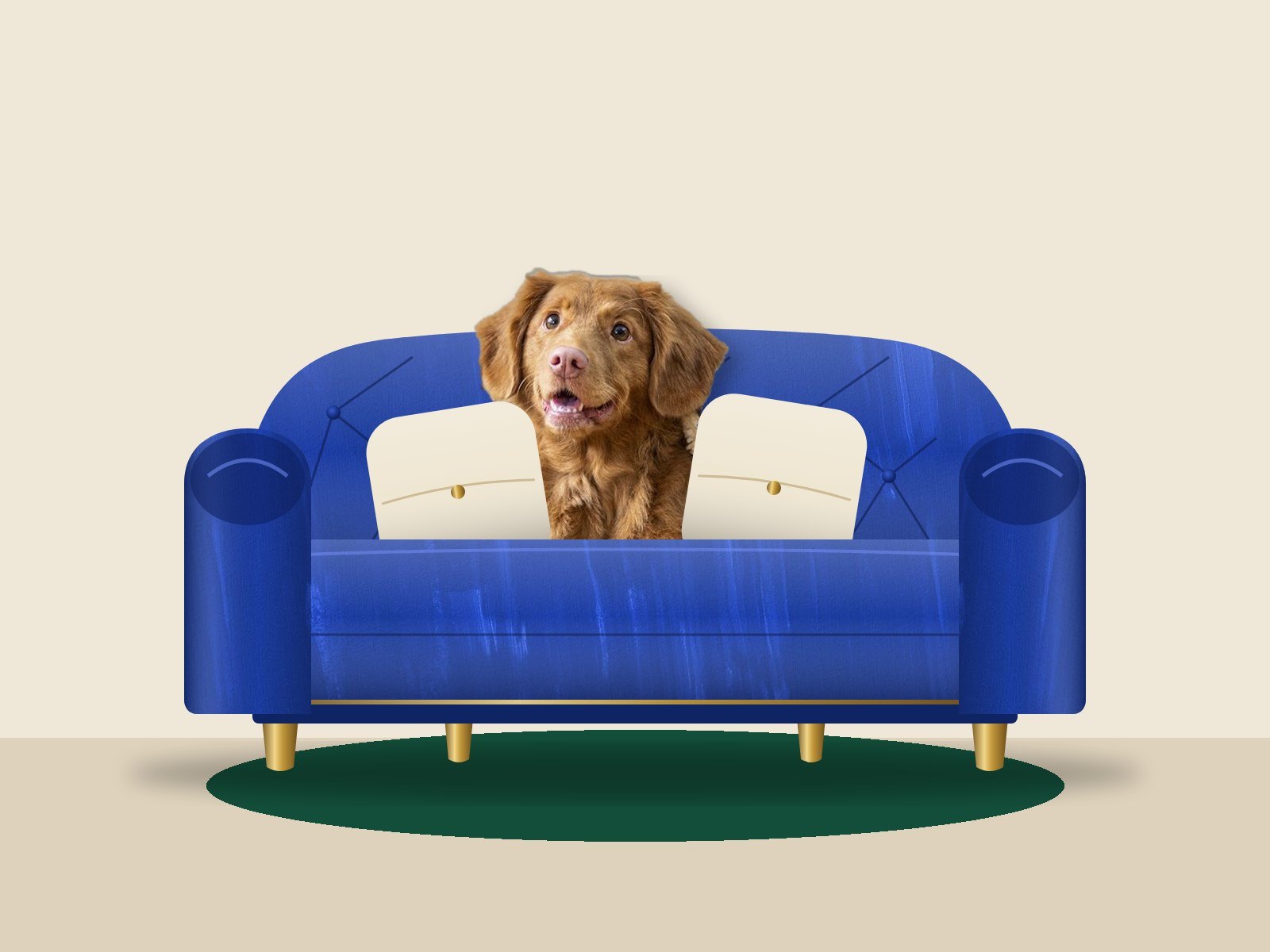
How to clean a fabric sofa, step by step
What you need
- Vacuum with upholstery and crevice attachments
- Several white microfiber cloths (white so no dye transfers)
- A soft-bristled brush
- Distilled water (tap water can leave mineral rings on some fabrics)
- For W codes: mild, clear dish soap or a water-based upholstery cleaner
- For S codes: a water-free upholstery solvent
- A spray bottle, and a fan for drying
For W and W/S fabrics
- Vacuum thoroughly, including crevices.
- Spot test. Mix a small amount of mild dish soap into a cup of distilled water. Apply a little to a hidden area, blot, and let it dry fully. Check for color change, bleeding onto the cloth, rings or texture change.
- Clean in sections. Dampen a cloth with the solution, wring it out well, and work panel by panel with light dabbing or gentle circular strokes. You want the surface damp, not wet. For general grime, a light, even pass over a whole panel avoids patchy results.
- Rinse. Go over the area with a second cloth dampened in plain distilled water to lift soap residue, which otherwise attracts dirt.
- Blot dry with a dry towel, pressing firmly.
- Air-dry with good ventilation or a fan. Avoid heaters and hairdryers, which can shrink fabric and set any remaining stain. Brush the nap once dry.
For S fabrics
- Vacuum thoroughly.
- Ventilate. Open windows; solvents give off fumes. Keep away from flames and heat.
- Spot test the solvent on a hidden area and let it evaporate fully before judging.
- Apply sparingly to a clean white cloth, not directly onto the sofa, and blot the soiled area from the outside in.
- Let it evaporate, then brush the fabric gently to restore texture.
For large areas of grime on S-coded fabric, a professional is usually the better choice; solvents are hard to apply evenly at home over a whole sofa.
How to remove specific stains
General rules: act fast, blot rather than rub, work from the edge of the stain toward the center so it does not spread, and test first. Use cold or lukewarm water rather than hot, which can set protein and tannin stains. The water-based methods below apply only to W and W/S fabrics; on S fabrics use an upholstery solvent, and on X fabrics call a professional.
Coffee and tea
Blot up as much as possible. Dab with a cloth dampened in cool distilled water mixed with a little dish soap, then rinse with plain water and blot dry. If milk was in it, follow with an enzyme cleaner suited to the fabric for any lingering residue.
Red wine
Blot immediately; do not rub. Dab with cool water and a little dish soap, working inward, and blot repeatedly with fresh areas of the cloth. Avoid salt, which can set the stain on some fabrics, and avoid bleach on colored upholstery. Old wine stains often need a professional.
Grease and oil
Scrape off any solids. Sprinkle cornstarch or baking soda on the spot and leave it for 15 to 30 minutes or longer to absorb the oil, then vacuum. On W fabrics, follow with a small amount of dish soap solution, which cuts grease. On S and W/S fabrics, an upholstery solvent is usually more effective on oil.
Ink
On fabrics that tolerate it, dab a little isopropyl (rubbing) alcohol onto a white cloth or cotton swab and blot the ink, switching to a clean area often. Do not pour alcohol onto the fabric. Test first: alcohol can lift dye on some fabrics. Large or set ink stains are a job for a professional.
Pet urine
Blot up as much as possible by pressing a thick towel into the spot; urine can soak into the cushion and padding. Then use an enzyme cleaner made for upholstery, following the label and allowing the dwell time it specifies. Enzymes break down the compounds that cause odor, which is why pets stop returning to the spot. Enzyme cleaners are water-based, so use them only on W and W/S fabrics. Avoid ammonia-based cleaners, whose smell can attract pets back. If urine has reached the foam, removing and treating the insert or calling a professional may be the only full fix. See our pet-friendly sofa guide.
Removable covers, odors and deep cleaning
Removable cushion covers
A zip on a cushion cover does not automatically mean it is machine washable; the zip is often there for manufacturing. Only machine-wash covers if the care label says so. If it does, close the zips, wash cold on a gentle cycle, and air-dry, putting covers back on while slightly damp so they stretch into shape. Wash all matching covers together so they age and fade evenly. Sofas designed with washable covers, such as the Cortile chaise sectional, are much easier to keep fresh in a family home.
Odors
Baking soda is safe for most fabrics because it is dry. Sprinkle a light, even layer over the seats and back, leave it for at least 20 minutes or overnight, then vacuum thoroughly. Test on a hidden area on dark fabrics, where residue can show. Airing the room and washing throws and pillow covers also helps. Persistent odor usually means the source is in the foam.
Steam cleaning and hot-water extraction
Rented upholstery extractors and steam cleaners can refresh a dingy W-coded sofa, but use them with care:
- Only on fabric coded W or W/S, and after a spot test.
- Heat can set protein stains such as urine, milk or blood, so treat those first.
- Overwetting is the main risk: water soaks into padding and foam, causes rings and browning as it dries, and can lead to odor or mildew if it stays damp.
- Some natural fibers, such as cotton, linen and viscose, can shrink or water-mark; velvet can crush.
- Never use steam on S or X fabrics, or on leather.
Use few passes, extract as much water as you can, and dry the sofa quickly with ventilation and fans.
When to call a professional
- The fabric is coded X, or S and the stain is large.
- There is no tag and you do not know the fiber content.
- The fabric is delicate: silk, viscose-rich blends, linen, velvet, or antique upholstery.
- Stains are old and set, or you have already tried and made them worse.
- Pet urine or a large spill has soaked into the foam.
- The whole sofa needs a deep clean and you want even results without water marks.
A professional upholstery cleaner can identify fibers, choose the right method and dry the piece properly. For a family sofa that sees constant use, an occasional professional clean can extend its life. More on that in our guide to how long a sofa lasts.
What not to do
- Do not rub stains. Rubbing spreads them and roughens the fibers. Blot.
- Do not soak the fabric. Excess water reaches the padding, leaving rings, browning and odor.
- Do not use hot water on unknown stains. Heat sets protein and tannin stains.
- Do not use bleach or bleach-containing sprays on colored upholstery, or ammonia on pet stains.
- Do not use colored cloths or paper towels that shed. Dye and lint transfer.
- Do not mix cleaning products. Some combinations release harmful fumes.
- Do not dry with heat. Hairdryers and heaters can shrink fabric and set stains.
- Do not skip the spot test, even with products labeled for upholstery.
Choosing the right fabric in the first place makes all of this easier. Tight weaves and family-proof fabrics, like the one on the pet-sized Cuccia, forgive more than loose, delicate weaves. If you are deciding between materials, our leather vs fabric sofa guide compares how each cleans up.
Questions people ask
How do I find my couch's cleaning code?
Look for a fabric tag under the seat cushions, on the underside of the sofa, or on the deck beneath the cushions. The code is usually a single letter or pair: W, S, W/S or X. If there is no tag, check the manufacturer's care instructions or your order documents.
Can I use dish soap to clean my couch?
On fabrics coded W or W/S, yes. A small amount of mild, clear dish soap in distilled water is a common, gentle cleaner. Use a barely damp cloth, rinse with plain water to remove residue, and blot dry. Do not use it on S or X coded fabrics, and spot test first.
Can you use baking soda and vinegar on a couch?
Baking soda on its own is safe for most fabrics as a dry deodorizer: sprinkle, wait, vacuum. Vinegar is acidic and water-based, so only consider it on W-coded fabrics after a spot test, and never on S or X. Mixing the two mainly produces fizz, not extra cleaning power.
How do you get water stains out of a fabric couch?
Water rings usually form when the edge of a wet area dries faster than the middle and leaves minerals or dirt behind. On W-coded fabric, lightly dampen the whole panel evenly with distilled water, blot, and dry quickly with a fan so there is no hard edge. On S-coded fabric, a professional is safer.
Can I steam clean my fabric sofa?
Only if it is coded W or W/S and passes a spot test. Treat protein stains such as urine first, since heat can set them. Use minimal moisture and dry the sofa quickly. Never steam S or X coded fabrics, delicate natural fibers that can shrink, or leather.
How often should I deep clean a fabric sofa?
Vacuum weekly and treat spills immediately. Many households deep clean once or twice a year, more often with pets, young children or a light-colored fabric. Regular vacuuming reduces how often a deep clean is needed and is the single best thing you can do for the fabric.
How do I get pet urine smell out of a couch?
Blot as much as possible, then apply an enzyme cleaner made for upholstery and leave it for the time on the label. Enzymes break down odor-causing compounds. Use enzyme cleaners only on W or W/S fabrics. If urine reached the foam, the insert may need professional treatment or replacement.
Pieces that fit this advice


Still deciding?
Bring your floor plan. A Blankspace designer will help you measure, choose coverings and compose the room, in the Bay Area or by video.
Keep reading
- Leather How to clean a leather sofa: step by step, by finish and by stain To clean a leather sofa, first identify the finish and spot test in a hidden area. Vacuum crevices with a soft brush, then wipe the surface with a… Read the guide
- Fabric Best upholstery fabric for a sofa: types, rub counts and cleaning codes For most homes, the best sofa fabric is a tightly woven performance fabric or a synthetic blend such as polyester or microfiber: durable… Read the guide
- Pets Best sofa for pets: fabrics, leather and features that survive dogs and cats The best sofa for pets has a tightly woven performance fabric or microfiber, or a protected (pigmented) leather, plus removable, washable covers and… Read the guide
- Care How long does a sofa last? Lifespan by build quality, and how to make yours last longer A sofa typically lasts 5 to 7 years if it is budget-built, 7 to 15 years if it is mid-range, and 15 years or more if it is well made. The frame… Read the guide