Living room
Best sofa for pets: fabrics, leather and features that survive dogs and cats


The short answer
The best sofa for pets has a tightly woven performance fabric or microfiber, or a protected (pigmented) leather, plus removable, washable covers and a color close to your pet's coat. Avoid loose weaves, loops like bouclé, and aniline leather, which scratch, snag and stain easily. Firm, tight-back cushions and legs or a plinth that's easy to clean under help too.
Remember
- Tight, flat weaves and microfiber give claws nothing to hook into.
- Protected leather wipes clean and sheds hair; aniline and nubuck show every scratch.
- Removable, washable covers are the single most useful feature for pet owners.
- Match the sofa's color and pattern to your pet's coat to hide hair between cleans.
- Avoid loops, slubs and loose textures such as bouclé, chunky chenille and open linen.
Contents
What makes a sofa pet-friendly
Pets challenge a sofa in four ways: claws (scratching, kneading, digging), hair (shedding that weaves into fabric), accidents and drool (liquids and odor), and weight and movement (jumping on, sleeping in the same spot every day). A pet-friendly sofa handles all four.
In order of importance, look for:
- Surface: a tight weave or a protected leather that claws slide off and hair doesn't cling to.
- Cleanability: removable, washable covers, or a cleaning code that lets you use water (W or W/S).
- Color and pattern: close to your pet's coat, with some variation to hide marks.
- Construction: cushions that hold their shape, and a frame that's easy to vacuum around and under.
No upholstery is truly claw-proof. The goal is a sofa that resists most damage, cleans easily, and doesn't show the rest.
The best fabrics for pets
The weave matters more than the fiber name. Run a fingernail across a swatch: if it catches a loop or pulls a thread, a claw will too.
Microfiber
Microfiber is woven so densely there are typically no loops for claws to snag, and hair tends to sit on the surface where a lint roller or damp rubber glove lifts it. It can show water marks, so blot spills rather than scrub.
Performance fabrics
Performance fabrics, usually synthetic and often solution-dyed, are engineered to resist stains and moisture and clean easily. In a tight, flat weave they are a strong choice for dogs and cats, especially if accidents are a concern.
Tightly woven synthetics and canvas
Tight polyester and synthetic blends, or heavy cotton canvas, resist snagging well. Canvas works especially well as a washable slipcover.
Denser velvets
A short, dense synthetic velvet has no loops for claws and lets hair brush off easily. It does show pressure marks and paw prints, so it suits people who like its texture anyway.
Fabrics to avoid
- Bouclé and looped weaves: loops catch claws and pull.
- Chunky chenille and nubby textures: snag easily and trap hair.
- Loose or open-weave linen and cotton: pull, stain and hold odor.
- Silk and delicate fabrics: scratch and stain permanently.
- X-coded fabrics: vacuum only, so accidents need a professional.
For more on fibers, rub counts and cleaning codes, see the upholstery fabric guide.
Leather and pets: protected vs aniline
Leather is often an excellent choice with pets, but only the right kind.
Protected (pigmented) leather has a surface coating that resists stains, wipes clean with a damp cloth, and gives hair nothing to cling to. It doesn't trap dander or odor the way fabric can, which some allergy sufferers appreciate. Claws can still scratch it, but light scratches are typically less visible on a coated, uniform surface and can often be buffed or touched up. The Piazza is upholstered in protected leather and is a natural fit for homes with pets.
Semi-aniline is a middle ground: more natural look, some protection, scratches show more.
Aniline leather has no protective coat. Every claw mark, drool spot and paw print shows, and liquids soak in. Some owners embrace the resulting patina; most find it frustrating with a dog that jumps up daily.
Nubuck and suede are the worst leather choice for pets: they absorb liquids and oils, and paws mark the nap.
Read more about finishes in our guide to types of leather, and keep the leather cleaning guide handy for accidents.
Comparison: upholstery options for pet owners
| Material | Claw resistance | Hair | Accidents and odor | Verdict |
|---|---|---|---|---|
| Microfiber | Good | Sits on surface; easy to remove | Good; can water-mark | Excellent all-rounder |
| Performance fabric (tight weave) | Good | Moderate to easy | Very good | Excellent, especially for accidents |
| Protected leather | Fair; scratches possible but less visible | Very easy | Very good; wipes clean | Excellent for dogs; test with cats |
| Synthetic velvet (dense) | Good | Easy to brush off | Moderate | Good if you like the look |
| Canvas slipcover | Good | Moderate | Very good; machine washable | Good and practical |
| Aniline leather | Poor; every mark shows | Easy | Poor; absorbs liquids | Only if you love patina |
| Bouclé / looped weaves | Poor | Traps hair | Moderate | Avoid |
| Loose linen / cotton | Poor | Traps hair | Poor | Avoid unless slipcovered |
Removable covers, cushions and construction
Removable, washable covers
If you choose one feature, choose this. Zip-off seat and back covers let you deal with accidents properly rather than spot-cleaning forever, and replacement covers can renew a sofa after years of wear. Check the care label for wash temperature and whether covers should be air-dried, since many shrink in a dryer. The Cortile chaise sectional has washable covers, which makes it a practical pick for families with dogs.
Cushions
- Tight backs (upholstered to the frame) leave fewer gaps for pets to burrow into and fewer cushions to drag onto the floor.
- Firmer seats that recover their shape cope better with a pet sleeping in the same spot every afternoon. Very soft, down-heavy cushions show dents and nests quickly.
- Reversible loose cushions let you flip and rotate to spread wear.
Frame and form
- Raised legs make it easy to vacuum hair underneath; aim for enough clearance for your vacuum head, typically about 4 to 6 in (10 to 15 cm).
- A closed plinth or skirt stops toys and hair disappearing underneath but must be vacuumed around regularly.
- Avoid exposed tufting and buttons, which can be chewed and trap hair.
- Track or low arms resist kneading better than deeply padded, rolled arms that cats like to dig into.
- Lower seat heights are kinder to small, older or arthritic dogs that jump up.
Color, pattern and the hair problem
Every sofa will collect hair. The question is whether you see it.
- Match your pet's coat. A golden retriever on a mid-tan sofa is nearly invisible; on charcoal it is not. Hold a swatch against your pet, literally.
- Choose mid-tones over extremes. Very dark fabrics show light hair and dust; very light ones show dirt, paw prints and drool.
- Use texture and pattern carefully. A heathered, tweedy or subtly patterned flat weave hides hair and marks far better than a solid. Just avoid loops.
- Two-pet households: pick a tone between both coats, or a fine multi-tone weave.
For daily hair removal, a rubber glove or squeegee drawn across fabric lifts hair efficiently, as does a vacuum with an upholstery or pet attachment. On leather, a damp microfiber cloth is enough.
Claws: protecting any sofa
- Give them a better option. For cats, place a sturdy scratching post right beside the sofa arm they favor; cats typically prefer tall, stable posts they can stretch on fully.
- Give them their own sofa. Pets often take the spot that smells like you. The Cuccia, a pet-sized sofa in family-proof fabric, gives a dog or cat a seat of its own right next to yours, which can make the real sofa less contested.
- Trim nails regularly. Short, blunt claws do far less damage to any upholstery.
- Use a throw on the favorite spot. A washable blanket on the corner your dog claims saves the sofa and is easy to wash weekly.
- Deter early. Double-sided tape or a throw over the arm a kitten has started scratching is easier than fixing the habit later.
For the rest of the decision, from size to seat depth, see how to choose a sofa, or browse the Blankspace Editions living collection, designed for everyday family life.
Questions people ask
What is the best couch material for dogs?
Tightly woven performance fabric, microfiber, and protected (pigmented) leather are typically the best for dogs. They resist snagging, release hair easily and clean up after muddy paws and drool. Removable, washable covers add a big margin of safety for accidents.
What sofa fabric do cats not scratch?
No fabric is completely scratch-proof, but cats are less drawn to tight, smooth weaves like microfiber and dense synthetic velvet, because there is nothing for their claws to hook into. Looped fabrics such as bouclé and nubby textures tend to attract scratching. Place a scratching post nearby.
Is a leather sofa good with pets?
Protected (pigmented) leather is good with pets: it wipes clean, doesn't trap hair or odor, and light scratches are typically less visible. Aniline leather and nubuck are poor choices because they absorb liquids and show every claw mark. Cats may still scratch any leather, so provide alternatives.
What color couch hides pet hair best?
The color closest to your pet's coat hides hair best. Mid-tones are generally more forgiving than very dark or very light fabrics, and a heathered or subtly patterned flat weave hides hair and marks better than a solid color. Test a swatch against your pet.
Is velvet good for pets?
Dense synthetic velvet can be surprisingly pet-friendly. It has no loops for claws to snag and hair brushes off easily. It does show pressure marks and paw prints, and delicate cotton or silk velvets should be avoided. Check for a W or W/S cleaning code.
How do I get pet hair off a fabric sofa?
Draw a slightly damp rubber glove or rubber squeegee across the fabric to pull hair into clumps, then vacuum with an upholstery or pet attachment. A lint roller handles touch-ups. Doing this a couple of times a week keeps hair from working into the weave.
Is microfiber good for pets?
Yes. Microfiber's very dense weave typically resists claw snags and liquid penetration, and hair tends to sit on the surface where it is easy to remove. It can show water marks, so blot spills and clean the whole panel evenly if needed.
Pieces that fit this advice
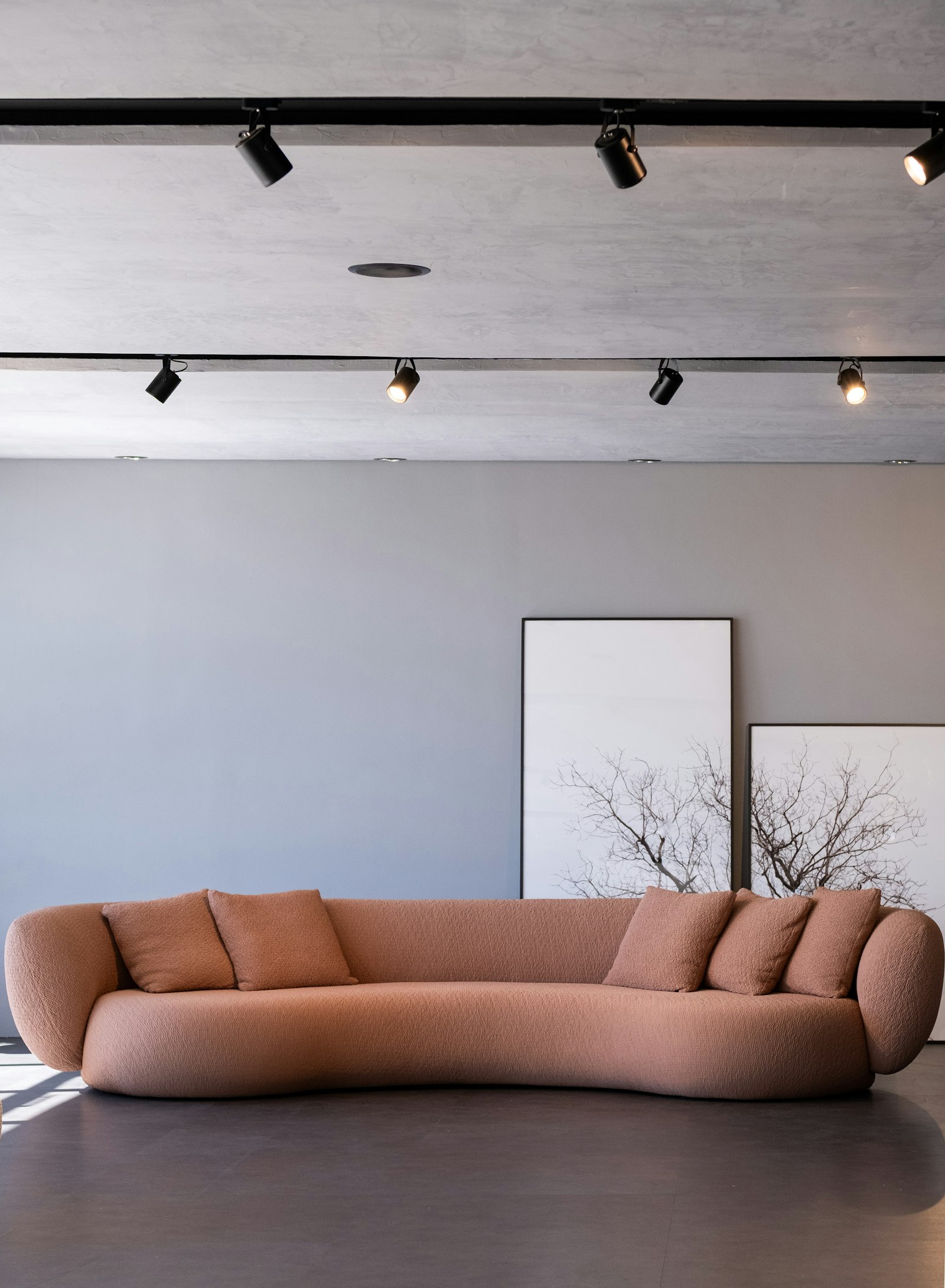

Still deciding?
Bring your floor plan. A Blankspace designer will help you measure, choose coverings and compose the room, in the Bay Area or by video.
Keep reading
- Fabric Best upholstery fabric for a sofa: types, rub counts and cleaning codes For most homes, the best sofa fabric is a tightly woven performance fabric or a synthetic blend such as polyester or microfiber: durable… Read the guide
- Leather Types of leather for furniture: grades, finishes and how to choose Furniture leather is defined by two things: the grade (which layer of the hide it comes from) and the finish (how it is dyed and protected)… Read the guide
- Leather How to clean a leather sofa: step by step, by finish and by stain To clean a leather sofa, first identify the finish and spot test in a hidden area. Vacuum crevices with a soft brush, then wipe the surface with a… Read the guide
- Buying guide How to choose a sofa: frame, springs, cushions and fit To choose a sofa, start with size: measure the room and every doorway on the delivery route. Then check the construction: a kiln-dried hardwood or… Read the guide