Materials
Best upholstery fabric for a sofa: types, rub counts and cleaning codes


The short answer
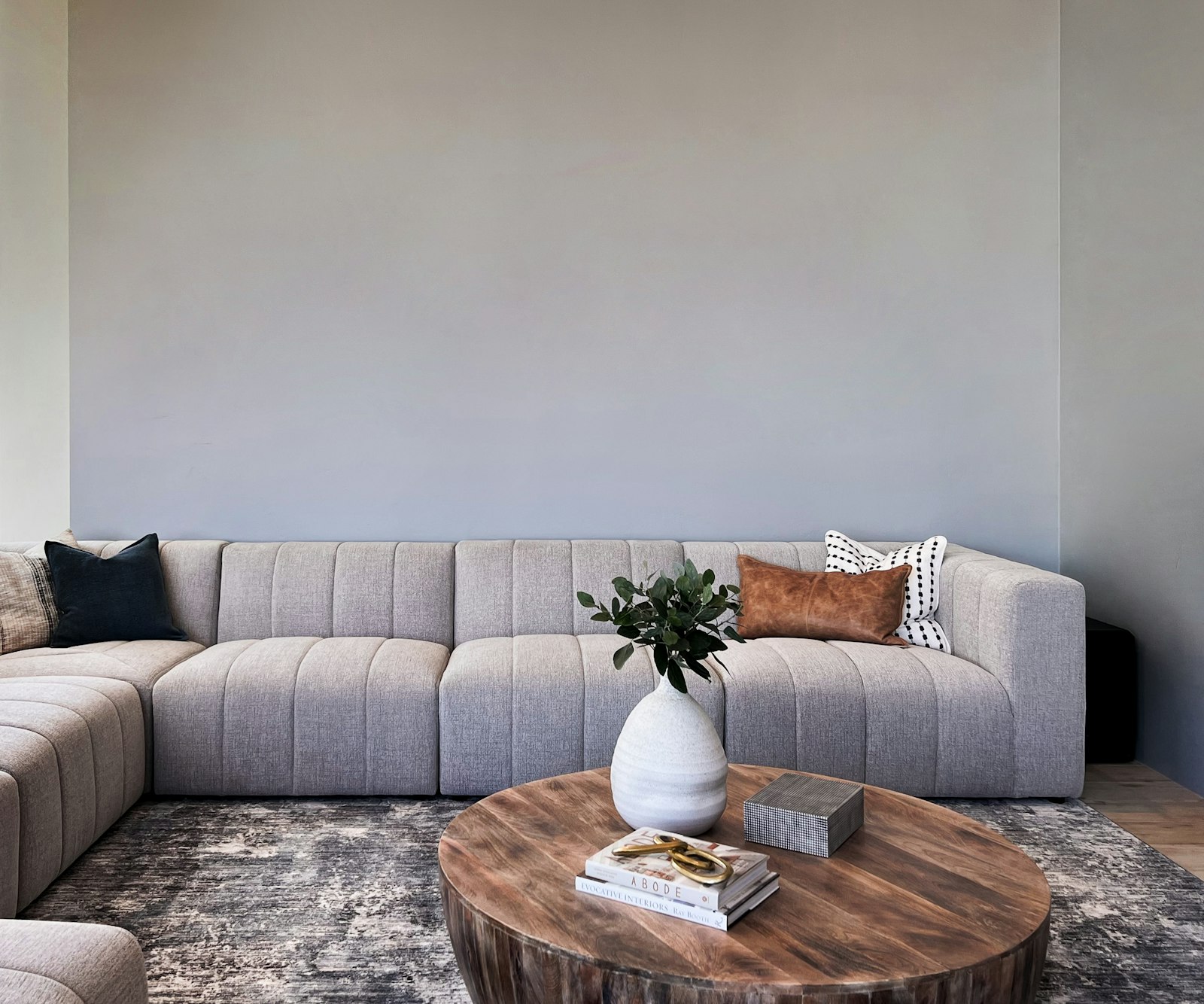
For most homes, the best sofa fabric is a tightly woven performance fabric or a synthetic blend such as polyester or microfiber: durable, stain-resistant and easy to clean. For a family sofa, look for roughly 15,000+ Wyzenbeek double rubs or 25,000+ Martindale cycles and a W or W/S cleaning code. Linen, velvet and bouclé suit lighter use.
Remember
- Tight weaves and synthetic blends typically outlast loose, natural weaves on everyday sofas.
- Conventional guidance: about 15,000+ double rubs (Wyzenbeek) or 25,000+ cycles (Martindale) for heavy home use.
- Cleaning codes: W = water-based, S = solvent-based, W/S = either, X = vacuum only.
- Linen and cotton feel great but wrinkle and stain more easily unless blended or treated.
- Rub count measures abrasion only; pilling, fading and snagging are separate tests.
Contents
How to choose: four questions before the swatch
Fabric choice is a trade between how a sofa feels, how it looks after a few years, and how much effort it takes to keep it that way. Answer these first and the shortlist writes itself.
- Who uses it, and how hard? A sofa that hosts children, pets and nightly film marathons needs a different fabric than a living-room piece used mostly on weekends.
- What spills are likely? If the answer is "wine, juice and everything else", look for a performance fabric with a W or W/S cleaning code.
- How much sun does the spot get? Natural fibers and saturated colors typically fade faster in direct light. Solution-dyed synthetics resist fading best.
- Do you want texture or a smooth face? Loops, slubs and nubby weaves hide wear but can snag. Smooth, tight weaves are easiest to clean.
The weave often matters as much as the fiber. A tightly woven fabric of almost any fiber will usually outperform a loosely woven one, because there are fewer gaps for dirt to settle into and fewer loose yarns to catch.
Sofa fabric types compared
Performance fabrics
"Performance" describes behavior rather than a fiber: fabrics engineered or treated to resist stains, moisture and fading and to clean easily. Most are synthetic (polyester, olefin or acrylic) or synthetic blends, and many are solution-dyed, meaning color is added to the fiber before it is spun, so it runs all the way through. They typically handle spills, sunlight and heavy use best. Quality and feel vary widely, so judge by hand and by the specifications.
Polyester
Durable, resists wrinkling, fading and stretching, and is relatively inexpensive. Polyester is often blended with natural fibers to make them tougher. Lower-quality polyester can pill and may attract oil stains, so look for a tight weave.
Microfiber
A very fine polyester (sometimes with nylon) woven or knitted so densely it feels like suede. Its tight structure typically resists liquids and is hard for pet claws to snag, which is why it is a long-standing family favorite. It can show water marks and attract lint and pet hair.
Chenille
Yarn with a soft, fuzzy pile, made from cotton, synthetics or blends. Very comfortable and fairly durable in a dense weave, but the loops can snag on claws and the pile can crush in heavily used seats.
Cotton
Soft, breathable and takes dye beautifully. Pure cotton stains, wrinkles and fades fairly easily; cotton blends or treated cotton are better for upholstery. Canvas-weight cotton is the toughest form.
Linen
Cool, crisp and relaxed-looking, with natural slubbed texture. Linen is strong but wrinkles readily, can pill and soil easily, and is typically best on a slipcover or a lightly used sofa. Linen-polyester blends and linen-look synthetics give the look with more resilience; the Riva uses a linen-look weave for exactly that reason.
Wool
Resilient, naturally resists soiling and wrinkles, and is inherently flame-resistant. Wool blends are hard-wearing and warm-feeling. It typically needs professional cleaning for serious stains and can feel scratchy in some weaves.
Velvet
A short, dense cut pile with deep color and sheen. Modern synthetic velvets are surprisingly durable and easy to wipe; cotton and silk velvets are more delicate. All velvet shows pressure marks (crushing) and pile direction, which many people consider part of its charm.
Bouclé
A looped yarn, traditionally wool, that creates a nubby, cloud-like texture. It hides minor soiling well and is wonderfully tactile, but loops can snag on claws, jewelry and zippers and can be harder to spot-clean.
Rub counts explained: Wyzenbeek double rubs and Martindale cycles
Rub counts measure abrasion resistance: how much rubbing a fabric survives before showing noticeable wear. There are two common tests, and their numbers are not directly comparable.
- Wyzenbeek (double rubs) is the method most often quoted in North America. A machine rubs a cotton duck cloth back and forth across the fabric; one back-and-forth pass is one double rub.
- Martindale (cycles or rubs) is the method most often quoted in Europe and internationally. The fabric is rubbed against a standard abradant in a figure-eight pattern.
The thresholds below are commonly cited industry guidance, not regulations. Manufacturers and trade organizations draw the lines slightly differently, so treat them as rough bands.
| Use | Wyzenbeek (double rubs) | Martindale (cycles) |
|---|---|---|
| Decorative / occasional (accent pillows, rarely used chairs) | Under about 9,000 | Under about 10,000 |
| Light domestic use | About 9,000 to 15,000 | About 10,000 to 15,000 |
| General domestic (an everyday sofa) | About 15,000+ | About 15,000 to 25,000 |
| Heavy domestic (busy family, pets) | About 15,000 to 30,000 | About 25,000+ |
| Commercial / contract | Commonly 30,000+ for heavy duty | Commonly 30,000 to 40,000+ |
Two caveats. First, more is not endlessly better: beyond roughly 30,000 to 50,000 double rubs, extra rubs rarely change real-world life on a home sofa. Second, rub count only measures abrasion. A fabric with a high count can still pill, fade, snag or stain, which are tested separately. Ask for pilling and lightfastness ratings too if you can.
Cleaning codes: W, S, W/S and X
Most upholstery fabrics carry a cleaning code on the tag or specification. It tells you what can be used on the fabric without damaging it, and it is worth checking before you buy, not after the first spill.
| Code | Meaning | What it means in practice |
|---|---|---|
| W | Water-based cleaners | Spot-clean with water and mild detergent or upholstery shampoo. The easiest code to live with. |
| S | Solvent-based only | Use water-free dry-cleaning solvents; water can leave rings or shrink the fabric. Common on some velvets, rayons and natural blends. |
| W/S (or SW) | Either water or solvent | Flexible. Use mild water-based cleaners for most spills and solvent for oily stains. |
| X | Vacuum or brush only | No water, no solvent. Any stain typically needs a professional. Best avoided on sofas that see daily use. |
Whatever the code, test any cleaner on a hidden area first, blot rather than rub, and work from the outside of the stain inward. Removable, washable covers, as on the Cortile, change the equation entirely: check the care label for wash temperature and whether the cover can go in a dryer, since many should be air-dried to avoid shrinking.
Quick comparison table
| Fabric | Durability | Stain resistance | Feel | Best for |
|---|---|---|---|---|
| Performance (synthetic) | High | High | Varies; many are soft | Families, pets, sunny rooms |
| Polyester | High | Moderate | Smooth | Everyday sofas on a budget |
| Microfiber | High | Moderate to high | Suede-like | Pets, children |
| Chenille | Moderate to high | Moderate | Plush, fuzzy | Comfort-first living rooms without claws |
| Cotton (blend) | Moderate | Low to moderate | Soft, breathable | Casual rooms, slipcovers |
| Linen | Moderate | Low | Cool, crisp | Light use, warm climates, slipcovers |
| Wool (blend) | High | Moderate to high | Warm, textured | Long-lasting, classic pieces |
| Velvet | Moderate to high (synthetic) | Moderate (synthetic) | Rich, plush | Statement sofas, adult households |
| Bouclé | Moderate | Moderate; hides soiling | Nubby, soft | Accent chairs, low-traffic sofas |
Our recommendations by household
- Young children: performance fabric or microfiber in a mid-tone or subtle pattern, W or W/S code, ideally with removable covers. A family chaise sectional like the Cortile is built around this brief.
- Pets: tight, flat weaves; avoid loops and loose textures that claws catch. See our pet-friendly sofa guide.
- Sunny room: solution-dyed synthetics resist fading best. Avoid saturated cottons and silks near south- or west-facing windows.
- Adults, low traffic, want texture: linen, bouclé, wool or velvet. The soft modular pieces of Isole suit tactile fabrics, since they are about lounging rather than heavy-duty use.
- Hot climate: linen, cotton and breathable blends stay cooler than dense synthetics or velvet.
- Allergies: tight, smooth weaves that are easy to vacuum, or leather, trap less dust than deep piles and loops.
Still deciding between fabric and hide? Our leather vs fabric sofa guide lays out the trade-offs, and the types of leather guide covers grades and finishes. To compare swatches in person, find a Blankspace store, or explore fabrics as you build a piece in Create your sofa.
Questions people ask
What is the most durable fabric for a sofa?
Tightly woven synthetic performance fabrics, polyester, microfiber and wool blends are typically the most durable for everyday sofas. Look for a high rub count, roughly 15,000+ Wyzenbeek double rubs or 25,000+ Martindale cycles for heavy home use, along with good pilling and fade resistance.
How many double rubs do I need for a sofa?
Commonly cited guidance is around 15,000 double rubs or more for an everyday family sofa, with 9,000 to 15,000 considered light to medium residential use. Above roughly 30,000, extra rubs rarely make a practical difference at home. Rub count measures abrasion only, not stains or pilling.
What does a W/S cleaning code mean?
W/S means the fabric can be cleaned with either water-based or solvent-based cleaners. Use a mild water-based upholstery cleaner for most spills and a dry-cleaning solvent for oily stains. Always test on a hidden area first and blot rather than rub.
Is linen a good fabric for a sofa?
Linen is strong, breathable and beautiful, but it wrinkles easily, can pill and soils readily. It works best on slipcovered sofas, in adult households, or as a linen blend. Linen-look synthetics give a similar appearance with more stain resistance and less creasing.
Is velvet hard to keep clean?
Modern synthetic velvets are easier than their reputation suggests: many repel spills and can be wiped or spot-cleaned. Cotton and silk velvets are more delicate. All velvet shows pressure marks and changes shade with the pile direction, which a soft brush can even out.
Is bouclé practical for a sofa?
Bouclé hides light soiling well and is very comfortable, but its loops can snag on pet claws, jewelry and zippers, and stains can be harder to lift from the texture. It is typically better for accent chairs or sofas in adult, pet-free homes.
What is the difference between Martindale and Wyzenbeek?
Both measure abrasion resistance. Wyzenbeek, common in North America, rubs fabric back and forth and counts double rubs. Martindale, common in Europe, rubs in a figure-eight pattern and counts cycles. The methods differ, so their numbers can't be converted directly.
Pieces that fit this advice

Still deciding?
Bring your floor plan. A Blankspace designer will help you measure, choose coverings and compose the room, in the Bay Area or by video.
Keep reading
- Materials Leather vs fabric sofa: which is better for you? Leather is usually the better choice if you want easy wipe-clean care, resistance to pet hair and dust, and a sofa that ages with character. Fabric… Read the guide
- Pets Best sofa for pets: fabrics, leather and features that survive dogs and cats The best sofa for pets has a tightly woven performance fabric or microfiber, or a protected (pigmented) leather, plus removable, washable covers and… Read the guide
- Leather Types of leather for furniture: grades, finishes and how to choose Furniture leather is defined by two things: the grade (which layer of the hide it comes from) and the finish (how it is dyed and protected)… Read the guide
- Glossary Upholstery terms glossary: sofa and chair vocabulary A, Z Key upholstery terms: kiln-dried means frame wood dried to low moisture so it won't warp. Sinuous springs are zigzag wires; eight-way hand-tied… Read the guide