Reference
Upholstery terms glossary: sofa and chair vocabulary A, Z


The short answer
Key upholstery terms: kiln-dried means frame wood dried to low moisture so it won't warp. Sinuous springs are zigzag wires; eight-way hand-tied springs are coils tied by hand. Double rubs and Martindale measure fabric durability. Top-grain and aniline are leather types. Tight back means no loose back cushions; track arms are straight and squared; a welt is a corded seam.
Remember
- Frame terms (kiln-dried, dowel, corner block) tell you how long a piece will last.
- Suspension terms (sinuous, pocketed coil, eight-way hand-tied, webbing) describe what supports the seat.
- Double rubs (US) and Martindale (Europe) both measure fabric abrasion resistance, but aren't directly convertible.
- Arm and back terms (track, rolled, tuxedo; tight, loose, pillow) describe a sofa's silhouette.
Contents
A, B
Aniline leather: Leather dyed through with soluble dyes and left without a protective surface coating. It shows the hide's natural grain and feels soft, but absorbs spills and fades in sunlight more readily than protected leather. See types of leather.
Apron: A strip of wood or upholstery running below the seat between the legs, hiding the frame. Common on traditional chairs and tables.
Attached cushions: Cushions sewn or fixed to the frame so they can't be removed or flipped. They stay neat but can't be rotated to spread wear.
Bench seat: A single long seat cushion spanning the full width of a sofa instead of two or three separate cushions. No gaps between cushions, but wear can concentrate where people sit most.
Bonded leather: A material made from leather scraps and fibers bonded to a backing and coated to look like leather. Less durable than genuine hide and prone to peeling.
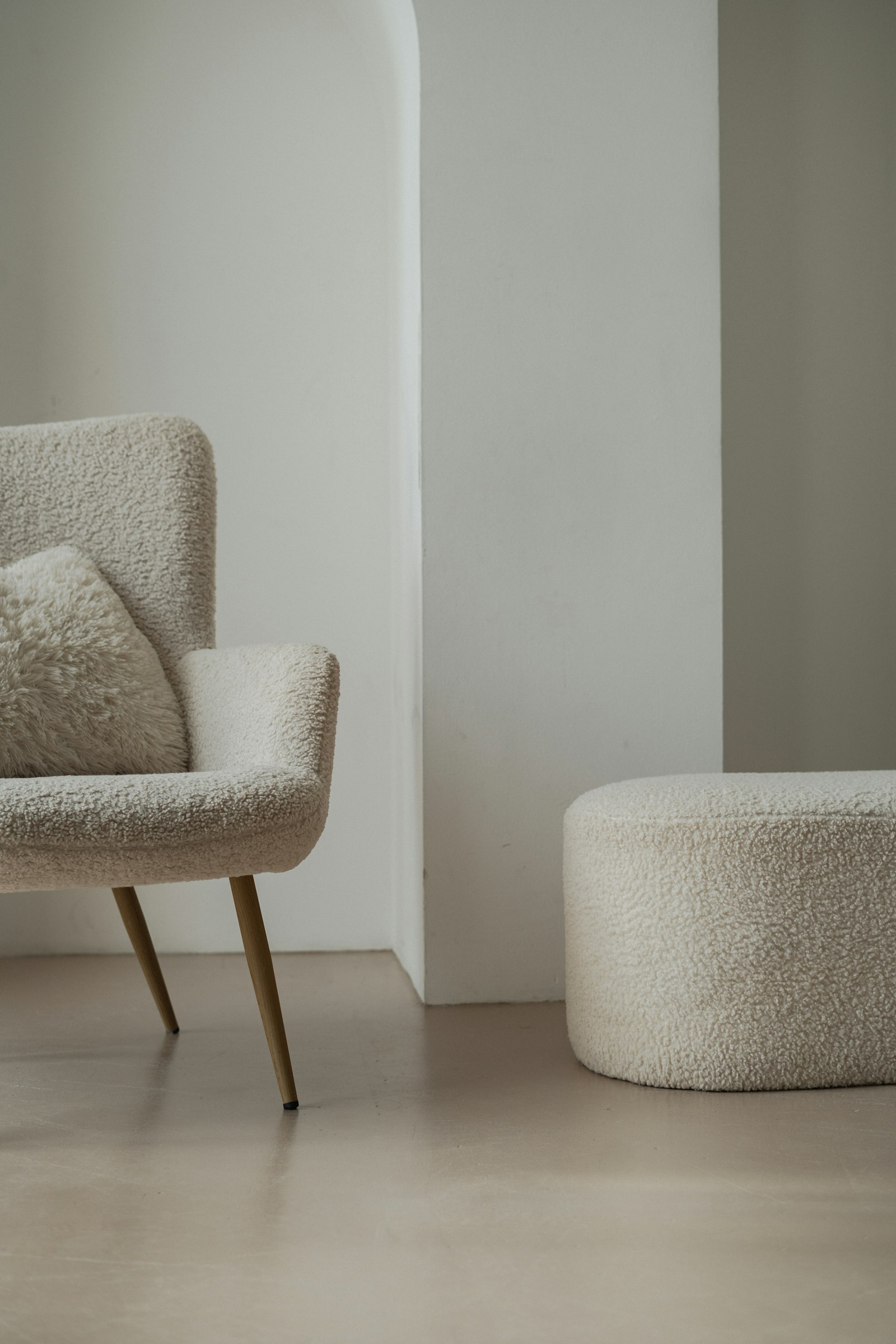
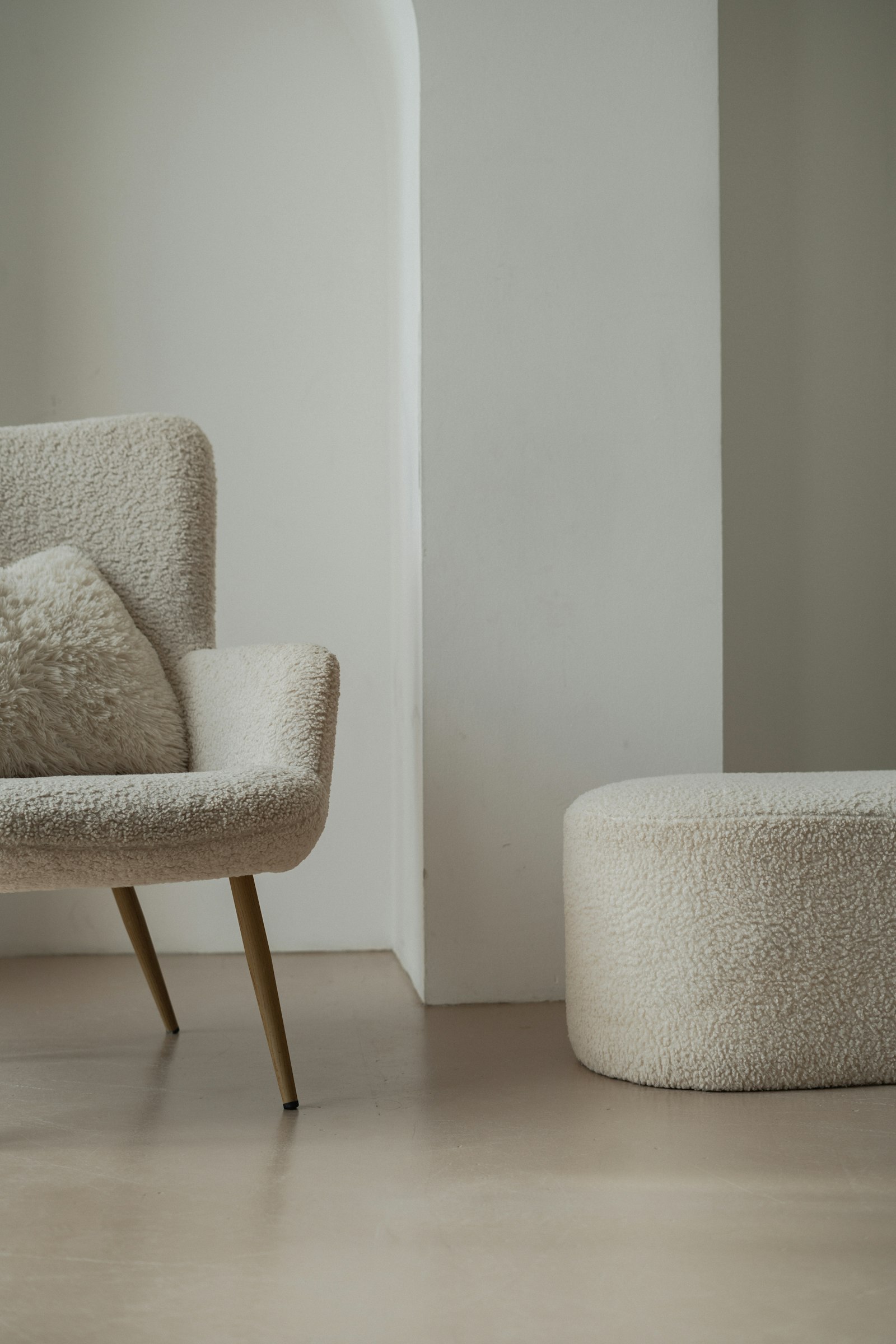
Bouclé: A fabric woven from looped yarn, giving a nubby, textured surface. From the French for curled. Loops can snag on claws and jewelry.
Box cushion: A cushion with flat top and bottom panels joined by a boxing strip, giving squared edges. Often finished with welting along the seams.
Bun feet: Rounded, flattened ball-shaped feet, usually turned wood. Typical of traditional and some mid-century styles.
Bustle back: A back made of loose, stacked pillows or a double-layered back cushion that looks gathered or tiered, giving a soft, deep backrest.
C
Camelback: A sofa back with one or more humps rising to a peak, usually in the center. A classic traditional silhouette, often paired with rolled arms.
Chaise: An extended seat long enough to stretch your legs; on sectionals, the long section at one end. Short for chaise longue, French for long chair.
Channel tufting: Upholstery stitched into parallel vertical or horizontal channels, each filled with padding. Common on headboards and retro-inspired seating; our Sipario bed uses a tall channel-quilted headboard.
Chesterfield: A sofa with deep button tufting, rolled arms the same height as the back, and often nailhead trim. Traditionally upholstered in leather.
Cleaning code: A letter on the care label indicating how upholstery fabric can be cleaned: typically W (water-based), S (solvent-based), W/S (either), or X (vacuum only).
Club chair: A low, deep, fully upholstered armchair with thick arms, traditionally leather. See our armchair guide.
Corner block: A small, usually triangular wooden block glued and screwed into the inside corners of a frame to brace the joints. A marker of sturdy construction.
Cushion core: The inner filling of a cushion, usually foam, sometimes springs or a foam-and-coil combination, before any wrap or cover is added.
D, F
Deck: The platform under the seat cushions, covered in a plain fabric. Its suspension (springs or webbing) supports the cushions.
Distressed leather: Leather finished to look worn or aged, with variations in color and texture. Marks blend in rather than standing out.
Double rubs: A measure of fabric abrasion resistance from the Wyzenbeek test, used mainly in the US. A machine rubs the fabric back and forth; 15,000 or more double rubs is commonly cited as suitable for heavy residential use.
Dowel: A wooden pin glued into matching holes in two frame members to join them. Dowelled and glued joints are stronger than stapled ones.
Down blend: Cushion filling mixing down (soft underfeathers) with feathers, often around a foam core. Soft and relaxed, but needs regular plumping.
Dust cover: A thin fabric sheet stapled across the underside of a sofa or chair to keep dust out and hide the frame.
Eight-way hand-tied: A traditional suspension system in which individual coil springs are tied by hand with twine in eight directions. It gives even, durable support and is labor-intensive.
English arm: A low, slightly rolled arm set back from the front of the seat, typical of the English roll-arm sofa with its tight back and deep seat.
Feather wrap: A layer of down and feathers, or a down blend, wrapped around a foam core. It combines foam's support with a softer surface.
Fiberfill: Polyester fiber filling used in back cushions, pillows and as a wrap around foam. Soft and inexpensive; can flatten over time.
Full-grain leather: Leather that keeps the hide's whole outer grain layer, unsanded. The most durable grade; it shows natural marks and develops a patina.
G, M
Gauge: The thickness of spring wire. With springs, a lower gauge number means thicker, stiffer wire.
High-resilience (HR) foam: Foam with an irregular cell structure that springs back quickly and supports well. Commonly described as having a density of about 2.5 lb per cubic foot or more.
IFD / ILD: Indentation force deflection (or load deflection): the force needed to compress foam by a set percentage. It describes firmness; higher numbers feel firmer. Separate from density.
Kiln-dried: Wood dried in a controlled chamber to a low moisture content, commonly around 6 to 8%, so it moves less once in a heated home. Kiln-dried hardwood frames resist warping. See how to tell quality furniture.
Lawson: A sofa style with the back cushions separate from the frame and arms set lower than the back.
Loose back: A back made of separate, removable cushions. Easy to rearrange and re-plump; the opposite of a tight back.
Loose cover: The British term for a slipcover: a removable, often washable fabric cover fitted over the upholstery.
Martindale: A measure of fabric abrasion resistance used mainly in Europe and the UK. A machine rubs the fabric in a figure-eight pattern; results are given in cycles. Not directly convertible to double rubs.
Mortise and tenon: A joint in which a projecting tongue (tenon) on one piece fits into a cavity (mortise) in another. One of the strongest traditional wood joints.
N, R
Nailhead trim: Decorative metal-headed nails or tacks set in a line along arms, frames or edges. Some are applied individually; others come as strips with occasional real nails.
Ottoman: An upholstered footstool, often doubling as extra seating, a table with a tray, or storage. Lift-top versions open for storage.
Patina: The softened color and sheen leather and wood develop with use and age. Prized on full-grain and aniline leathers.
Pillow back: A back made of loose, plump pillows, usually filled with fiber or down. Relaxed and soft; needs regular plumping.
Piping: See welt.
Pleating: Fabric or leather folded into regular, stitched pleats, often on chair backs or skirts. The Sartoria armchair uses pleating across its high back.
Pocketed coils: Individual springs sewn into fabric pockets so each moves independently. Used in seat decks or inside cushions for responsive, contouring support.
Protected leather: Leather with a pigmented surface coating that resists spills, stains and fading. Also called pigmented or finished leather. Practical for families.
Rolled arm: An arm that curves outward and over, like a scroll. A traditional shape found on Chesterfields and English sofas.
S
Seat depth: The distance from the front edge of the seat to the back cushion. On sofas it is typically about 20 to 25 in; deeper seats suit lounging. See sofa dimensions.
Seat height: The distance from the floor to the top of the seat cushion, typically 17 to 19 in on sofas.
Semi-aniline: Aniline leather with a light protective coating. It keeps much of the natural look while resisting stains better than pure aniline.
Sinuous spring: A continuous zigzag wire spring running front to back across the seat, also called an S-spring or no-sag spring. Durable and cost-efficient; quality depends on gauge and spacing.
Skirt: A fabric panel hanging from below the seat to the floor, hiding the legs. Can be straight, pleated or gathered.
Slipcover: A removable fabric cover made to fit a sofa or chair. Often washable, and useful for homes with children or pets.
Slipper chair: A low, armless upholstered chair with an upright back. Compact and good for bedrooms or as extra seating.
Split leather: Leather from the lower layers of the hide after the top grain is removed, often embossed and coated. Less durable than top-grain.
T, Z
Tight back: A back upholstered directly onto the frame with no loose cushions. It keeps a crisp, tailored shape and needs little maintenance.
Top-grain leather: Leather from the outer layer of the hide, lightly sanded or corrected and usually finished. Durable and uniform; easier to clean than full-grain.
Track arm: A straight, squared arm, usually narrow and the same height or slightly lower than the back. Clean and space-efficient; the Piazza uses track arms.
Tufting: Upholstery pulled in and secured at regular points, often with buttons, to create a patterned surface. Diamond tufting is the Chesterfield pattern; see also channel tufting.
Turned leg: A wooden leg shaped on a lathe, giving rounded profiles such as bulbs, rings or tapers.
Tuxedo arm: An arm the same height as the back, creating one continuous line around the sofa. Often straight and clean-lined.
Upholstery: The padding, springs, webbing and covering applied to furniture, and the craft of applying them.
Webbing: Interwoven straps, either elastic or jute, stretched across a frame to support the seat or back. Elastic webbing enables slim, modern profiles.
Welt: A fabric-covered cord sewn into a seam to define and reinforce it. Also called piping. A self-welt uses the same fabric as the upholstery; a contrast welt uses a different one.
Wingback: A chair with a tall back and side panels (wings) at head height, originally to shield sitters from drafts.
Wyzenbeek test: The US abrasion test that produces a fabric's double-rub rating. See double rubs.
Questions people ask
What is the difference between a tight back and a loose back sofa?
A tight back sofa has its back upholstered directly onto the frame with no separate cushions, so it stays crisp and needs little upkeep. A loose back sofa has removable back cushions, which feel softer and can be rearranged or plumped, but need regular attention to stay neat.
What does eight-way hand-tied mean?
It is a traditional seat suspension in which individual coil springs are tied together by hand with twine in eight directions: front to back, side to side, and both diagonals. It gives even support and can be repaired, but it is labor-intensive and therefore costly.
What is a good double rub count for a sofa?
For home use, 15,000 double rubs or more is commonly cited as suitable for heavy residential use, such as a family sofa. Lower ratings can be fine for occasional pieces. Double rubs measure abrasion only; weave, fiber and finish also affect how a fabric wears.
What is the difference between double rubs and Martindale?
Both measure fabric abrasion resistance, using different machines and methods. Double rubs come from the Wyzenbeek test, common in the US; Martindale uses a figure-eight rubbing pattern and is common in Europe and the UK. Because the tests differ, the numbers aren't directly convertible.
What is a track arm sofa?
A track arm sofa has straight, squared arms, usually narrow and at or slightly below the height of the back. Track arms give a clean, modern look and take up less width than rolled or padded arms, which leaves more seat space within the same overall length.
What does welt mean in upholstery?
A welt is a fabric-covered cord sewn into a seam to give it a defined, finished edge and reinforce it. It is also called piping. A self-welt uses the same fabric as the upholstery; a contrast welt uses a different color or material for emphasis.
What is the difference between top-grain and full-grain leather?
Full-grain leather keeps the hide's entire outer surface, including natural marks, and is the most durable grade. Top-grain leather is also from the outer layer but is lightly sanded or corrected and usually finished, so it looks more uniform and resists stains more easily.
Pieces that fit this advice

Still deciding?
Bring your floor plan. A Blankspace designer will help you measure, choose coverings and compose the room, in the Bay Area or by video.
Keep reading
- Quality How to tell quality furniture (and whether Italian furniture is worth it) Quality upholstered furniture typically has a kiln-dried hardwood or engineered frame joined with dowels, glue and corner blocks rather than staples… Read the guide
- Leather Types of leather for furniture: grades, finishes and how to choose Furniture leather is defined by two things: the grade (which layer of the hide it comes from) and the finish (how it is dyed and protected)… Read the guide
- Fabric Best upholstery fabric for a sofa: types, rub counts and cleaning codes For most homes, the best sofa fabric is a tightly woven performance fabric or a synthetic blend such as polyester or microfiber: durable… Read the guide
- Buying guide How to choose a sofa: frame, springs, cushions and fit To choose a sofa, start with size: measure the room and every doorway on the delivery route. Then check the construction: a kiln-dried hardwood or… Read the guide