Care
How to clean a leather sofa: step by step, by finish and by stain



The short answer
To clean a leather sofa, first identify the finish and spot test in a hidden area. Vacuum crevices with a soft brush, then wipe the surface with a cloth barely dampened in distilled water and a few drops of mild, pH-neutral soap. Wipe again with a clean damp cloth, dry with a soft towel, and condition once the leather is fully dry.
Remember
- Identify the finish first: protected leather tolerates gentle wet cleaning, aniline and nubuck far less.
- Always spot test any product on a hidden area and let it dry before judging.
- Use a barely damp cloth, never a wet one; water should not soak in.
- Condition clean, dry leather typically every 6 to 12 months, more often near heat or sun.
- Never use bleach, ammonia, solvents, baby wipes, furniture polish or a steam cleaner.
Contents
Step zero: identify your leather finish
Cleaning advice that works perfectly on one leather can ruin another. Before you touch the sofa, find out what you have. Check the care label, the manufacturer's documentation, or the original order. If none of that is available, do the water test.
The water test: on a hidden spot, such as the back near the floor or under a seat cushion, place a single drop of water.
- It beads and sits on top: pigmented (protected) leather, or a well-sealed semi-aniline. This is the most forgiving type and can be cleaned with the method below.
- It soaks in and darkens the spot within seconds: aniline leather. Use the gentlest approach, minimal moisture, and products made for aniline.
- The surface has a soft, velvety nap: nubuck or suede. Do not use water-based cleaning at all; skip to the nubuck notes below.
Let the drop dry fully. On aniline it should disappear without a trace; if it leaves a ring, that tells you to be even more careful. For a full explanation of finishes, see our guide to types of leather.
Routine care: weekly and monthly
Most leather damage is gradual: dust and body oils working into the grain, heat drying it out, sunlight fading it. Routine care prevents most deep cleaning.
- Weekly: dust with a dry microfiber cloth. Vacuum seams and crevices with a soft brush attachment. Grit in the creases acts like fine sandpaper when people sit.
- Monthly: wipe protected leather with a cloth dampened in distilled water and wrung out until it is almost dry. This lifts body oils from headrests and arms before they build up into dark, shiny patches.
- Every 6 to 12 months: clean and condition (see below). Typically more often if the sofa sits near a radiator, vent or sunny window, or gets heavy daily use.
Placement matters as much as cleaning. Keep leather at least a couple of feet from radiators, fireplaces and heating vents, and out of strong direct sun, which fades aniline especially quickly. Rotate and plump cushions so wear spreads evenly. Blot spills immediately with a dry, absorbent cloth: blot, don't rub.
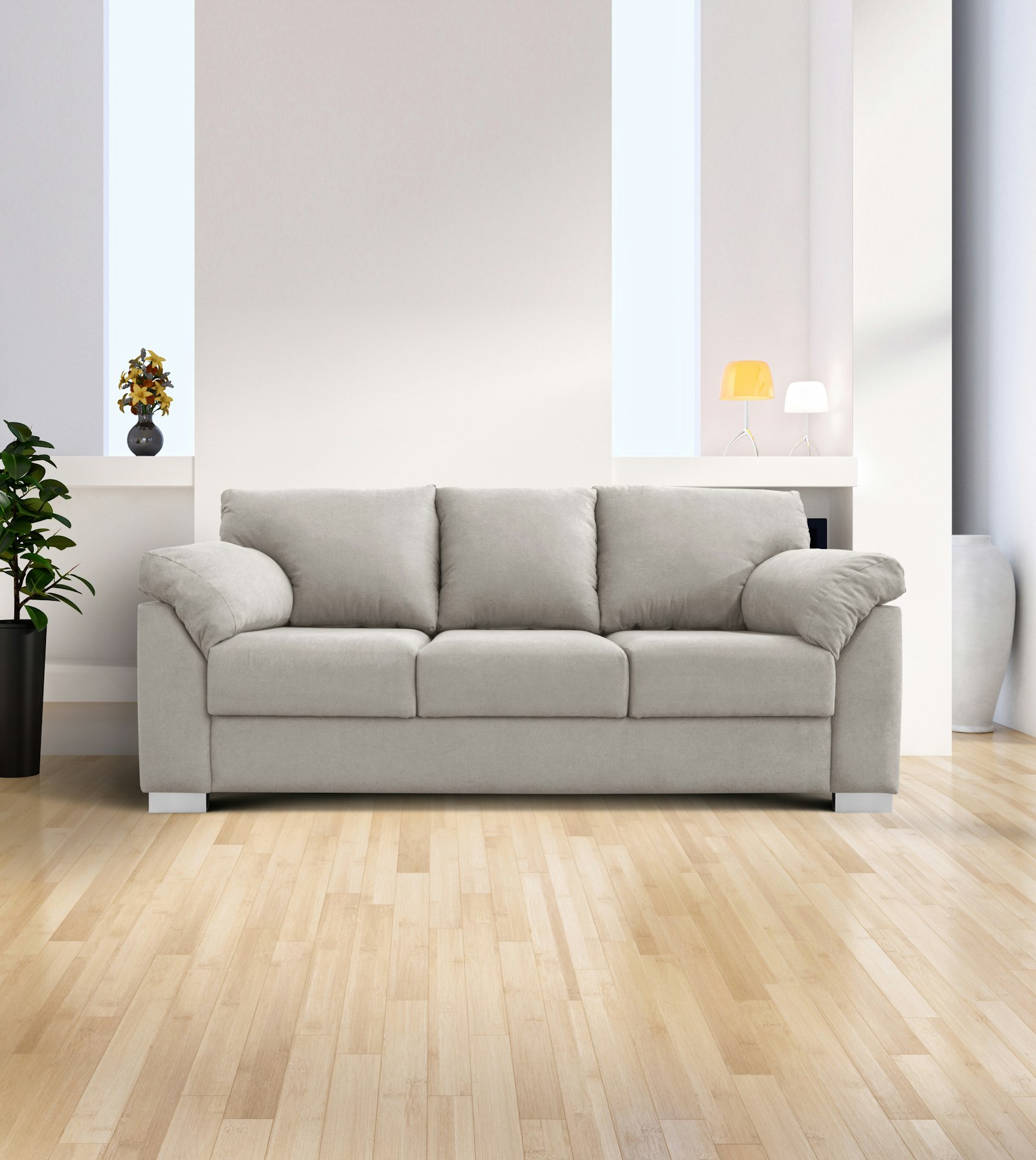
How to clean a leather sofa, step by step
This method is for protected and semi-aniline leather. For aniline, follow the same steps with less moisture and a dedicated aniline cleaner.
What you need
- Vacuum with a soft brush attachment
- Two or three clean, white microfiber cloths (white so no dye transfers)
- Distilled water (tap water can leave mineral marks)
- A mild, pH-neutral, fragrance-free liquid soap, or a cleaner made specifically for leather
- A leather conditioner suited to your finish
Steps
- Spot test. Apply your solution to a hidden area, let it dry completely, and check for darkening, color transfer to the cloth, or a change in sheen.
- Vacuum. Remove cushions if they are loose. Vacuum the deck, seams, piping and crevices with the brush attachment.
- Mix the solution. A few drops of mild soap in a bowl of distilled water is typically enough. You want barely any suds.
- Wipe in sections. Dip a cloth, wring it until it is just damp, and wipe one panel at a time with light, overlapping strokes. Work top to bottom: back, arms, then seats.
- Rinse. Wipe each section again with a second cloth dampened in plain distilled water to remove soap residue.
- Dry. Pat dry with a clean, dry towel. Let the sofa air-dry naturally; never use a hairdryer or heater to speed it up.
- Condition. Once fully dry, apply conditioner (next section).
Conditioning: how, how often, and with what
Leather contains natural oils that keep it supple. Over time, heat, dry air and cleaning remove some of them, and dry leather is more prone to stiffness and cracking. Conditioning replaces that moisture.
- How often: typically every 6 to 12 months for most homes, and every 3 to 6 months in very dry climates or near heat. Over-conditioning can leave a sticky film, so more is not better.
- What to use: a conditioner formulated for furniture leather and your specific finish. Products for car seats, shoes or saddles are often too heavy or contain waxes and solvents that change the color.
- How: spot test first. Apply a small amount to a clean cloth, not directly onto the leather, and work it in with gentle circular motions. Let it absorb for the time on the label, then buff off any excess with a dry cloth.
Protected leather has a coating that slows absorption, so it typically needs less conditioning than aniline. Aniline drinks conditioner readily and may darken slightly at first; this is why the spot test matters.
Specific stains: ink, grease, water and pets
Act quickly, test first, and start with the gentlest option. If a stain is large, set, or on aniline leather, a professional leather cleaner is usually the safer call.
Ink
On protected leather, fresh ink can often be lifted with a cotton swab barely dampened with isopropyl (rubbing) alcohol, dabbed only on the line, never rubbed outward. Test first, as alcohol can strip some finishes. Dedicated leather ink-removal sticks are a gentler option. On aniline, do not use alcohol; ink sinks into the hide quickly and usually needs a professional.
Grease and oil
Blot excess oil with a dry cloth. Sprinkle cornstarch or talc on the spot, leave it for several hours or overnight to draw the oil out, then brush it away gently. Repeat if needed. Do not add water first; it can spread the oil. On aniline, a small grease mark often fades into the leather over a few days on its own.
Water marks
Blot immediately. If a ring forms on aniline, dampen a cloth with distilled water and lightly moisten the whole panel, working from the stain outward to the seams, so it dries evenly without a hard edge. Let it air-dry.
Pet accidents and drool
Blot up as much as possible. Wipe the area with your mild soap solution, then plain distilled water, and dry. For lingering odor, use an enzyme cleaner that is labeled safe for leather, and test it first. Urine is acidic and can damage the finish if left, so speed matters. For more on choosing furniture around animals, see our pet-friendly sofa guide.
Dye transfer from jeans
Common on light leather. Try your mild soap solution first. If it persists, use a cleaner made for dye transfer on leather. Prevent it by washing new dark denim a few times before sitting on a pale sofa.
Aniline, protected and nubuck: what changes
| Protected (pigmented) | Semi-aniline | Aniline | Nubuck / suede | |
|---|---|---|---|---|
| Routine | Dust, damp wipe monthly | Dust, light damp wipe | Dust; minimal moisture | Dry brush with the nap |
| Cleaning | Mild soap solution | Mild soap solution, sparingly | Aniline-specific cleaner only | Suede eraser; no water |
| Conditioning | Less often | Every 6 to 12 months | Regularly; may darken at first | Nubuck protector, not conditioner |
| Spills | Usually wipe off | Blot fast | Absorb quickly; blot at once | Absorb quickly; blot at once |
| DIY stain removal | Reasonable, with testing | Cautious | Very limited; call a pro | Very limited; call a pro |
Protected leather is the easiest to keep looking new, which is why it is used on busy family pieces such as the Piazza. Aniline asks more of you but rewards you with patina; accept that some marks will become part of its character.
What never to use on leather
- Bleach, ammonia and household all-purpose sprays: they strip finishes and dry out the hide.
- Vinegar: often recommended online, but it is acidic and can dry leather and dull the finish.
- Solvents, nail polish remover, acetone: they dissolve finishes and dyes.
- Baby wipes and disinfectant wipes: they contain alcohols and surfactants that leave residue and can dry the surface over time.
- Saddle soap: made for heavy, tack-type leather; typically too harsh for upholstery.
- Furniture polish, silicone sprays, oils such as olive or coconut: they can leave a greasy film, attract dirt and go rancid.
- Steam cleaners and soaking wet cloths: excess water and heat can shrink, stiffen and stain leather.
- Hairdryers and heaters: drying with heat is a common cause of cracking.
- Abrasive pads, magic erasers and stiff brushes: they scratch the finish.
When in doubt, follow the manufacturer's care instructions for your specific piece. For leather recliners such as the Pausa or the Respiro, also keep liquids away from the power controls and mechanism when cleaning.
Questions people ask
What is the best homemade leather sofa cleaner?
For protected leather, a few drops of mild, pH-neutral, fragrance-free liquid soap in a bowl of distilled water works well. Apply with a well-wrung microfiber cloth, rinse with plain distilled water and dry. Skip vinegar and alcohol mixes, which can dry out the leather. Always spot test first.
How often should I condition a leather sofa?
Typically every 6 to 12 months for most homes, and every 3 to 6 months in very dry climates or if the sofa sits near heat or sunlight. Protected leather usually needs less conditioning than aniline. Over-conditioning can leave a sticky residue, so stick to a light application.
Can I use baby wipes on a leather sofa?
It is best not to. Baby wipes contain cleansing agents and sometimes alcohol that can dry out leather and leave a residue that attracts dirt. One emergency use on protected leather is unlikely to cause harm, but follow it with a damp cloth and don't make it routine.
How do I get a water stain out of leather?
Blot the area first. If a ring forms, lightly dampen a cloth with distilled water and moisten the whole panel, working from the mark outward to the seams so it dries evenly. Let it air-dry naturally without heat. Aniline leather often needs this treatment; protected leather rarely does.
Can I use vinegar to clean leather?
Vinegar is frequently suggested online, but it is acidic and can dry out leather and dull its finish, especially with repeated use. A mild, pH-neutral soap in distilled water, or a cleaner made specifically for leather, is a safer choice for routine cleaning.
How do you clean a white leather sofa?
Use the same gentle method: vacuum, wipe with a mild soap solution on a white microfiber cloth, rinse, dry and condition. White leather shows dye transfer from denim and body oils sooner, so a monthly damp wipe on arms and headrests helps. Use a dye-transfer cleaner for blue marks.
Should I hire a professional leather cleaner?
Consider a professional for set-in ink, large stains, discoloration, any staining on aniline or nubuck, or if the leather is cracking. They can clean, recolor and refinish in ways home methods can't. Routine dusting, wiping and conditioning are easy to handle yourself.
Pieces that fit this advice



Still deciding?
Bring your floor plan. A Blankspace designer will help you measure, choose coverings and compose the room, in the Bay Area or by video.
Keep reading
- Leather Types of leather for furniture: grades, finishes and how to choose Furniture leather is defined by two things: the grade (which layer of the hide it comes from) and the finish (how it is dyed and protected)… Read the guide
- Materials Leather vs fabric sofa: which is better for you? Leather is usually the better choice if you want easy wipe-clean care, resistance to pet hair and dust, and a sofa that ages with character. Fabric… Read the guide
- Pets Best sofa for pets: fabrics, leather and features that survive dogs and cats The best sofa for pets has a tightly woven performance fabric or microfiber, or a protected (pigmented) leather, plus removable, washable covers and… Read the guide
- Fabric Best upholstery fabric for a sofa: types, rub counts and cleaning codes For most homes, the best sofa fabric is a tightly woven performance fabric or a synthetic blend such as polyester or microfiber: durable… Read the guide