Living room
Throw pillow size guide: what size pillows for your sofa


The short answer
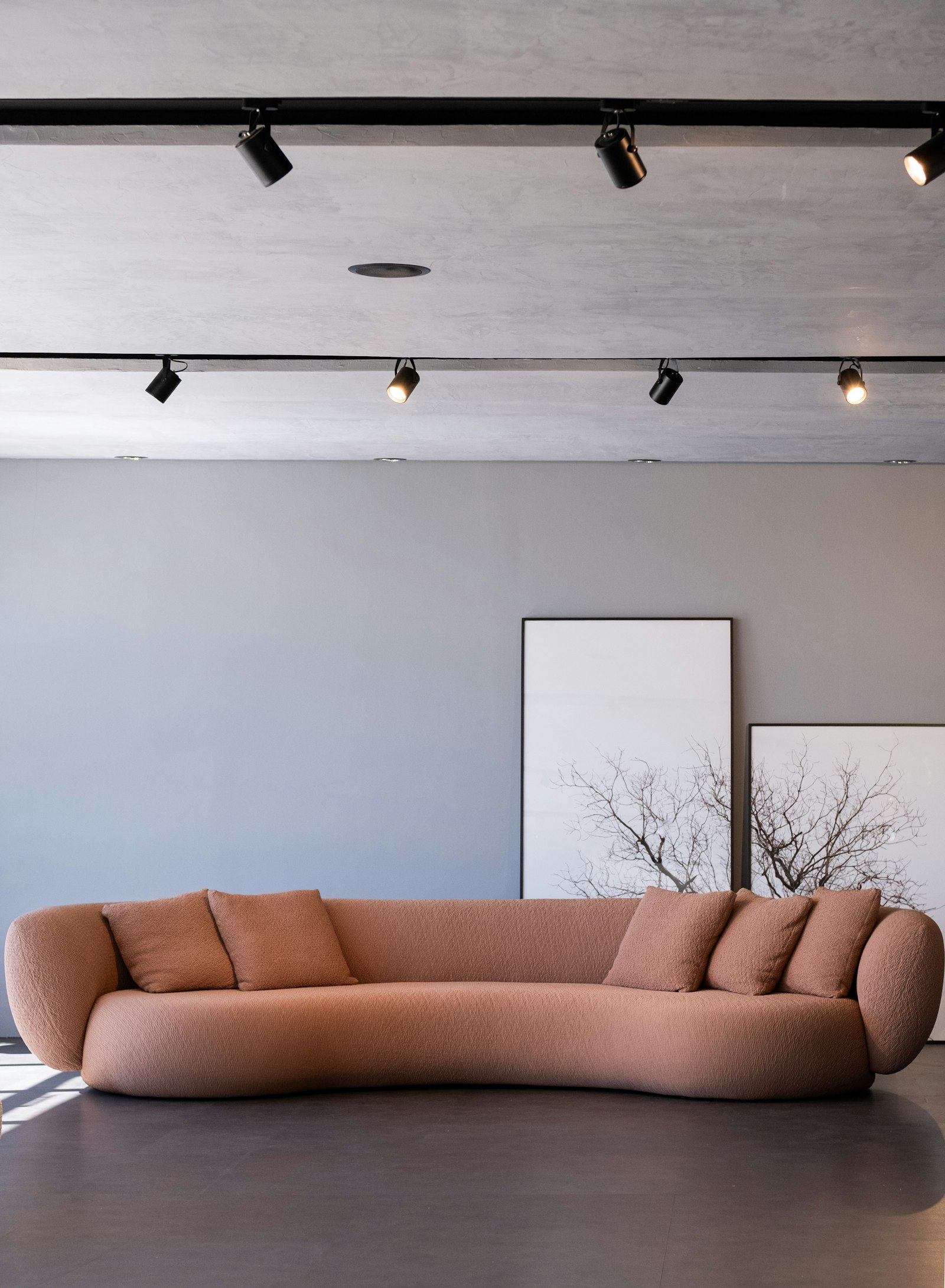
Most standard sofas suit 20- or 22-inch square throw pillows. Use 18-inch pillows on low-backed or compact sofas, and 22- to 24-inch pillows on deep or tall-backed sofas. Lumbar pillows, typically 12×20 or 14×24 inches, go in front of squares. Fill each cover with an insert one size up, such as a 20-inch insert in an 18-inch cover, for a full look.
Remember
- Common squares: 18, 20, 22 and 24 in; 20 to 22 in suits most sofas.
- Lumbar pillows are typically 12 x 20 or 14 x 24 in.
- Scale to the sofa: bigger pillows for deep seats and tall backs.
- Use an insert about 2 in larger than the cover for a plump look.
- Typical counts: 2 on a loveseat, 3 to 4 on a sofa, 5 to 7 on a sectional.
Contents
Standard throw pillow sizes
Throw pillows come in a handful of standard sizes, which makes covers and inserts easy to mix and replace. Sizes are given for the cover, measured seam to seam when the cover lies flat.
| Size | Shape | Best for |
|---|---|---|
| 16 x 16 in (41 x 41 cm) | Small square | Accent chairs, beds, layering in front of larger pillows |
| 18 x 18 in (46 x 46 cm) | Square | Armchairs, compact and low-backed sofas, loveseats |
| 20 x 20 in (51 x 51 cm) | Square | Most standard sofas; the most versatile size |
| 22 x 22 in (56 x 56 cm) | Large square | Standard to deep sofas, sectionals |
| 24 x 24 in (61 x 61 cm) | Oversized square | Deep sofas, tall backs, the back row of a layered arrangement |
| 12 x 20 in (30 x 51 cm) | Lumbar | Armchairs, front of an arrangement, lower-back support |
| 14 x 24 in (36 x 61 cm) | Lumbar | Sofas and beds |
| 14 x 36 in and longer | Long lumbar | Beds, long benches, the center of a long sofa |
Round pillows and bolsters exist too, typically used as a single accent rather than as the backbone of an arrangement.
How to choose the right size for your sofa
Throw pillows should look like they belong to the sofa, so size them against two measurements: the height of the back and the depth of the seat.
- Back height: measure from the top of the seat cushion to the top of the back. The largest pillows should sit below the top of the back, or only just reach it. Pillows that tower over the backrest look top-heavy and block the view across the room.
- Seat depth: deep seats, around 24 in or more of usable depth, leave a gap behind your back when you sit. Larger pillows, 22 to 24 in, fill that gap and make a deep sofa comfortable for people who want to sit upright.
- Low, shallow sofas: a sofa with a low back or a compact seat suits 18 to 20 in pillows. Oversized ones eat up the seat and push people forward.
- Arm height: pillows propped against a low arm look best at or below the arm's top; against a tall arm, a larger square fills the corner better.
| Sofa type | Main pillow size | Layer with |
|---|---|---|
| Compact sofa or loveseat, standard back | 18 to 20 in | 12 x 20 in lumbar |
| Standard sofa (about 80 to 90 in long) | 20 to 22 in | 18 in square or 14 x 24 in lumbar |
| Deep-seat sofa | 22 to 24 in | 20 in square or lumbar |
| Low-back, low-profile sofa | 18 to 20 in | 12 x 20 in lumbar |
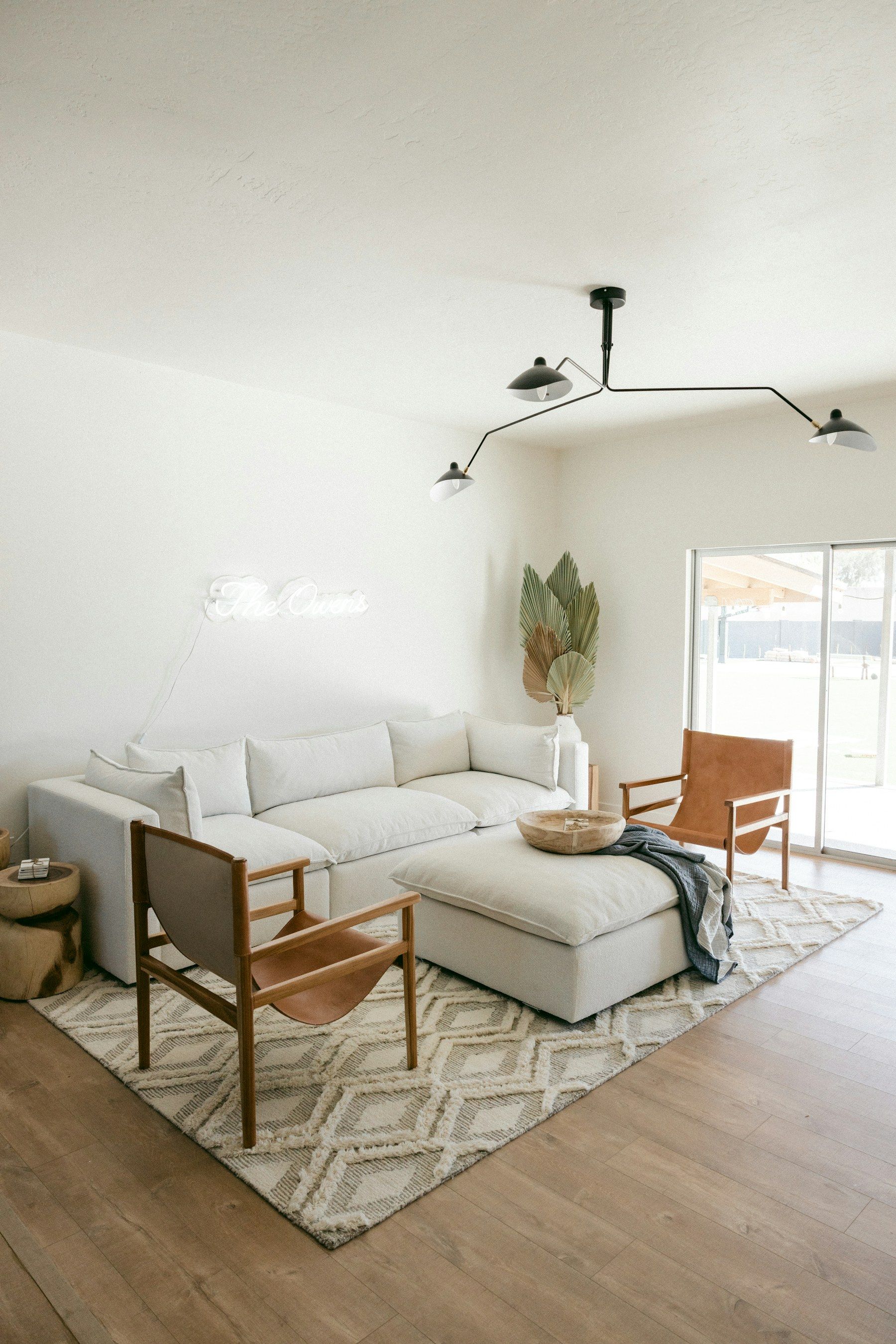
| Sectional | 22 to 24 in in the corner, 20 to 22 in elsewhere | Lumbar or 18 to 20 in squares |
A low, horizontal design like the Orizzonte calls for smaller, lower pillows that keep its line; a compact sofa like the Borgo works with 18 to 20 in squares rather than oversized ones.
How many throw pillows by sofa size
There's no fixed number, but these counts look balanced on most sofas and still leave room to sit.
| Sofa | Typical length | Pillows | Example arrangement |
|---|---|---|---|
| Loveseat | 52 to 68 in (132 to 173 cm) | 2 | One 20 in square at each end |
| Standard sofa | 72 to 90 in (183 to 229 cm) | 2 to 4 | Two 22 in squares, plus two 20 in squares or one lumbar |
| Large sofa | 90 to 100 in (229 to 254 cm) | 4 to 5 | Two 22 to 24 in squares, two 20 in squares, one lumbar in the center |
| L-shaped sectional | Varies | 5 to 7 | Large squares at the corner and both ends, smaller layers between |
| U-shaped sectional | Varies | 6 to 9 | Repeat the corner grouping in each corner, ends kept simpler |
Comfort is the real limit. If people have to move pillows to sit down, there are too many. On a sofa used daily, fewer and larger pillows are more practical than many small ones.
Arrangements: odd vs even
Even and symmetrical
Matching pairs at each end, mirrored, are the classic arrangement. It looks calm and ordered, suits traditional and formal rooms, and is the easiest to get right. A typical version: a large square at each end with a slightly smaller square in front.
Odd and asymmetrical
Three or five pillows feel more relaxed and collected. A common approach is two pillows at one end and one at the other, or a pair at each end with a single lumbar in the middle. Asymmetry works best when the pillows are still balanced in visual weight: a large pillow on one side can be offset by two smaller ones on the other.
Layering rules
- Put the largest pillows at the back and the ends; work smaller toward the front and the center.
- Change size by about 2 in or more between layers so the layering reads as intentional.
- Mix a solid, a pattern or texture and a smaller-scale pattern rather than several busy prints at the same scale.
- Repeat each color at least twice across the sofa so nothing looks stray.
Inserts: size up for fullness
The insert, the pillow form inside the cover, decides whether a throw pillow looks plump or flat. The usual rule is to choose an insert about one size up, roughly 2 in larger than the cover.
| Cover size | Insert for a full look |
|---|---|
| 16 in | 18 in |
| 18 in | 20 in |
| 20 in | 22 in |
| 22 in | 24 in |
| 12 x 20 in lumbar | 14 x 22 in or similar |
An oversized insert fills the corners of the cover, which otherwise tend to droop, and gives the pillow a soft, rounded profile. Some people prefer the same size insert for a flatter, tailored look, especially with polyester inserts, which are firmer and can strain a cover's seams if oversized. If a cover zipper is hard to close, the insert is too large.
Down, feather or polyester inserts
- Down and feather blends: soft, heavy and moldable. They hold the classic "karate chop" crease, compress when you lean on them and recover with a shake. Higher down content feels softer; higher feather content is firmer and more affordable. They need regular plumping and may shed a little.
- Down alternative: polyester fiber made to feel like down. Softer than standard polyester, a reasonable choice for allergy concerns, and usually machine washable, though it tends to flatten sooner than real down.
- Polyester fiberfill: inexpensive, springy and holds a rounder shape. It doesn't crease or mold as readily and may flatten or clump over time. Good for outdoor and children's pillows.
- Foam: firm and structured, used mainly for bolsters and very tailored looks.
Check whether covers are removable before buying; a zipper makes cleaning and seasonal changes far easier. Use the same insert type across an arrangement so the pillows sag and recover in the same way.
Pillows with the rest of the room
Throw pillows are the easiest way to change a sofa's color and texture without changing the sofa. Pick them after the sofa, using it as the base.
- Leather sofas: textured fabrics like linen, wool or boucle add contrast and stop pillows sliding on smooth leather. A best-seller like the Piazza, in protected leather, is a good example of a base that takes almost any fabric.
- Patterned sofas: keep pillows mostly solid and pull a color from the pattern.
- Family sofas: choose washable or performance covers, and fewer pillows.
- Sleeper sofas: keep the count low so pillows are quick to clear when the bed comes out; the Riva, with a hidden queen sleeper, is one to plan around.
For choosing the sofa color itself, see our sofa color guide, and for covering choices, the upholstery fabric guide. Browse rugs and accessories to complete the room.
Questions people ask
What size throw pillows for a sofa?
For most standard sofas, 20- or 22-inch square pillows work best. Use 18-inch pillows on compact or low-backed sofas and 22- to 24-inch pillows on deep or tall-backed sofas. Lumbar pillows of 12 by 20 or 14 by 24 inches can be layered in front.
What is the most common throw pillow size?
The most common sizes are 18 and 20 inches square. 20 inches is the most versatile for sofas, while 18 inches suits armchairs and smaller sofas. Larger 22- and 24-inch squares are common on deep sofas and sectionals.
How many throw pillows should go on a sofa?
Typically two on a loveseat, two to four on a standard sofa, four to five on a large sofa and five to seven on an L-shaped sectional. If people have to move pillows out of the way to sit down, there are too many for daily use.
Should a pillow insert be bigger than the cover?
Usually yes. An insert about 2 inches larger than the cover, such as a 20-inch insert in an 18-inch cover, fills the corners and gives a full, plump look. For a flatter, tailored look, or with firm polyester inserts, the same size works.
Should throw pillows be odd or even numbers?
Either works. Even, symmetrical pairs look calm and formal and are the easiest to get right. Odd numbers, such as three or five, feel more relaxed and collected, as long as visual weight is balanced across the sofa.
Are down or polyester pillow inserts better?
Down and feather inserts are softer, heavier and hold a crease, but need plumping. Polyester fiberfill is cheaper, springier and holds a rounder shape, but can flatten over time. Down alternative sits in between and suits people who prefer to avoid feathers.
What size lumbar pillow for a sofa?
Lumbar pillows are typically 12 by 20 or 14 by 24 inches. A 14 by 24 inch lumbar suits most sofas, often placed in front of square pillows or alone in the center. Longer lumbars of 36 inches or more work on large sofas and beds.
Pieces that fit this advice
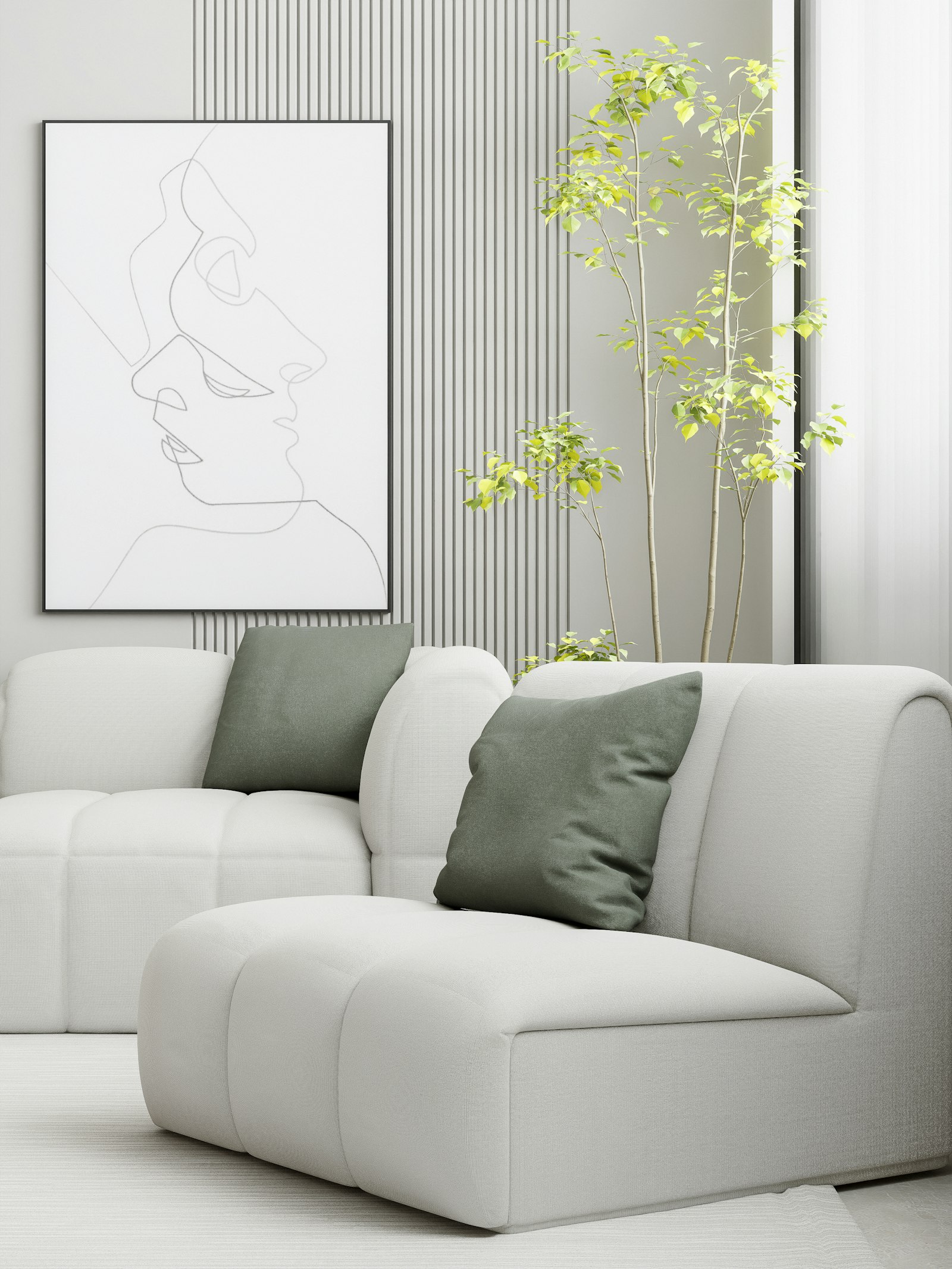


Still deciding?
Bring your floor plan. A Blankspace designer will help you measure, choose coverings and compose the room, in the Bay Area or by video.
Keep reading
- Color How to choose a sofa color: neutrals, statement shades and what actually works Choose a sofa color by starting with what stays put: your floor, walls and the light the room gets. Pick a neutral if you change decor often or want… Read the guide
- Fabric Best upholstery fabric for a sofa: types, rub counts and cleaning codes For most homes, the best sofa fabric is a tightly woven performance fabric or a synthetic blend such as polyester or microfiber: durable… Read the guide
- Sizing Sofa dimensions: standard sizes and how to measure A standard three-seat sofa is typically 72 to 90 in (183 to 229 cm) wide, 32 to 40 in (81 to 102 cm) deep and 30 to 36 in (76 to 91 cm) high… Read the guide
- Layout How to arrange living room furniture: layouts, distances and rules of thumb Start with a focal point (a fireplace, window or TV) and face the main sofa toward it. Group seating so people sit roughly 4 to 10 ft apart, keep… Read the guide