Bedroom
Nightstand height guide: how tall should a nightstand be?
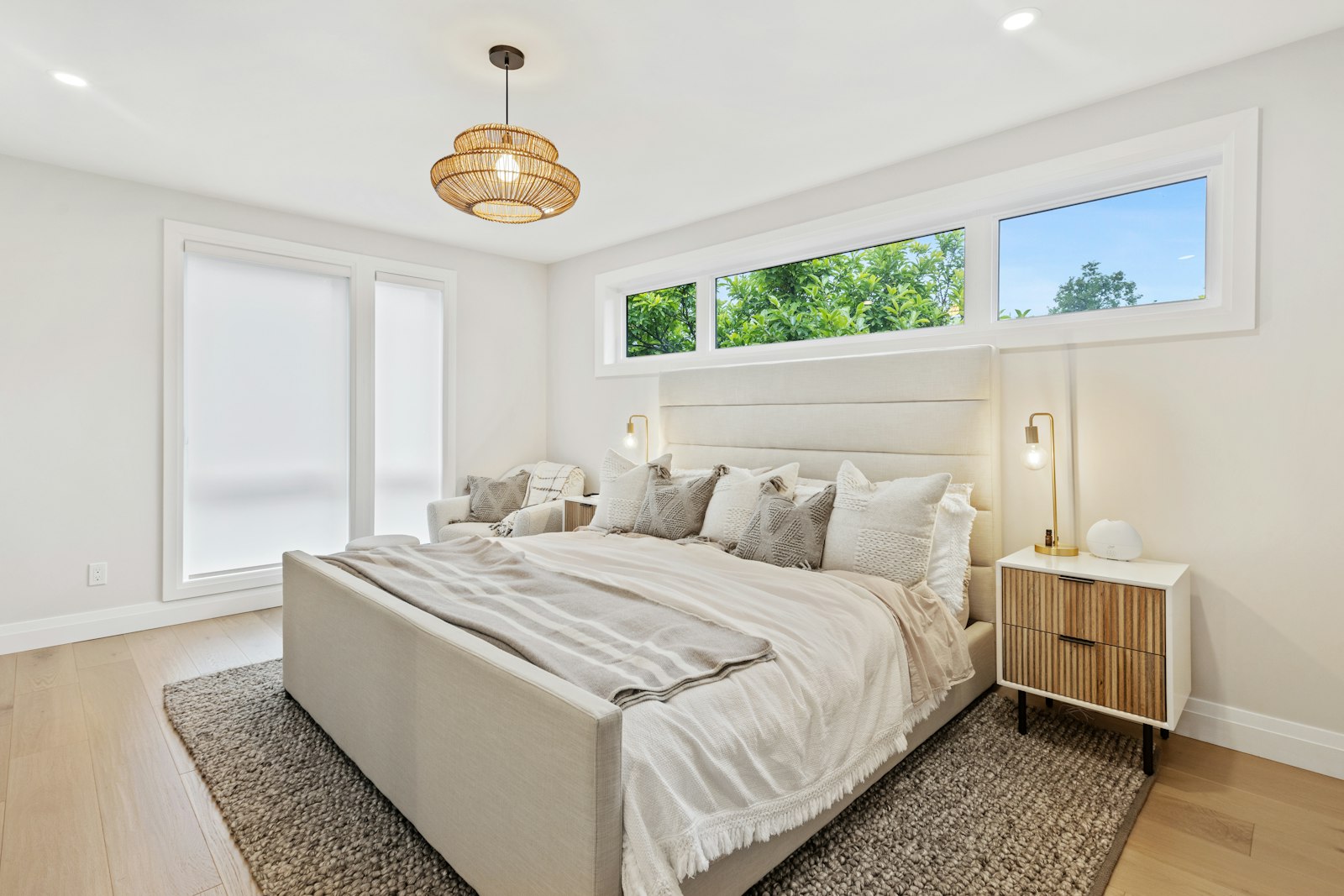


The short answer
A nightstand should be about level with the top of your mattress, ideally within 2 inches (5 cm) above or below it. For most beds that means a nightstand 24 to 30 inches tall. Measure from the floor to the top of the mattress, not the frame, and choose a nightstand within that 2-inch window so a phone, glass or book is easy to reach lying down.
Remember
- Match the nightstand top to the mattress top, within about 2 in (5 cm).
- Most nightstands are 24 to 30 in tall; low platform beds need lower ones.
- Width: roughly 18 to 24 in for a queen bed, 24 to 30 in for a king.
- Leave about 2 to 6 in between the nightstand and the bed.
- Aim for the bottom of a lamp shade near eye level when you sit up in bed.
Contents
The rule: level with the mattress
The right nightstand height comes from your bed, not from a catalogue. Measure from the floor to the top of the mattress, with any topper and bedding in place, and look for a nightstand whose top lands within about 2 in (5 cm) of that number, above or below.
Why level? Lying down, your arm reaches sideways. If the surface is level with the mattress you can set down a glass or pick up a phone without lifting your head or reaching up. A nightstand far above the mattress puts things at shoulder height and blocks the light from a lamp; one far below means reaching over the edge, which is where glasses get knocked over.
Slightly lower than the mattress usually feels better than slightly higher. A surface an inch or two below the mattress top stays out of your line of sight when you roll over and keeps the bed looking like the main piece in the room.
- Typical range: most nightstands are 24 to 30 in (61 to 76 cm) tall, because most bed frame and mattress combinations land in that range.
- Measure the finished bed: a new mattress can be several inches thicker or thinner than the old one, so measure after it arrives.
- Adjustable bases: an adjustable bed raises the head of the mattress when in use; size the nightstand to the flat position.
Nightstand height by bed height
Use this chart once you've measured floor to mattress top. Bed heights vary widely with frame style and mattress thickness, so treat the bed types as typical examples rather than fixed sizes.
| Floor to mattress top | Typical bed type | Nightstand height |
|---|---|---|
| 16 to 19 in (41 to 48 cm) | Low platform bed, thin mattress | 15 to 21 in (38 to 53 cm) |
| 20 to 23 in (51 to 58 cm) | Platform bed, standard mattress | 18 to 25 in (46 to 64 cm) |
| 24 to 26 in (61 to 66 cm) | Upholstered bed or frame with base | 22 to 28 in (56 to 71 cm) |
| 27 to 30 in (69 to 76 cm) | Frame with box spring, thick mattress | 25 to 32 in (64 to 81 cm) |
| 31 to 36 in (79 to 91 cm) | Tall traditional bed, pillow-top mattress | 29 to 38 in (74 to 97 cm) |
Very low beds are where most mismatches happen. Standard nightstands look oversized next to a platform bed with a thin mattress, so look for low designs, a wide low chest, or a wall-mounted shelf you can set at exactly the right height. At the other end, tall beds may need a taller chest or a small dresser, which also brings more storage.
Width, depth and scale
Height is functional; width and depth are about proportion and how much you keep by the bed. As a starting point, scale width to the bed:
| Bed size | Mattress width | Typical nightstand width |
|---|---|---|
| Twin | 38 in (97 cm) | 16 to 20 in (41 to 51 cm) |
| Full | 54 in (137 cm) | 18 to 22 in (46 to 56 cm) |
| Queen | 60 in (152 cm) | 18 to 24 in (46 to 61 cm) |
| King / California king | 76 / 72 in (193 / 183 cm) | 24 to 30 in (61 to 76 cm) |
Depth is typically 14 to 20 in (36 to 51 cm). Keep it shallower than the bed's side so the nightstand doesn't stick out past where you get in and out; a shallower piece also helps in a narrow room where the path beside the bed is tight.
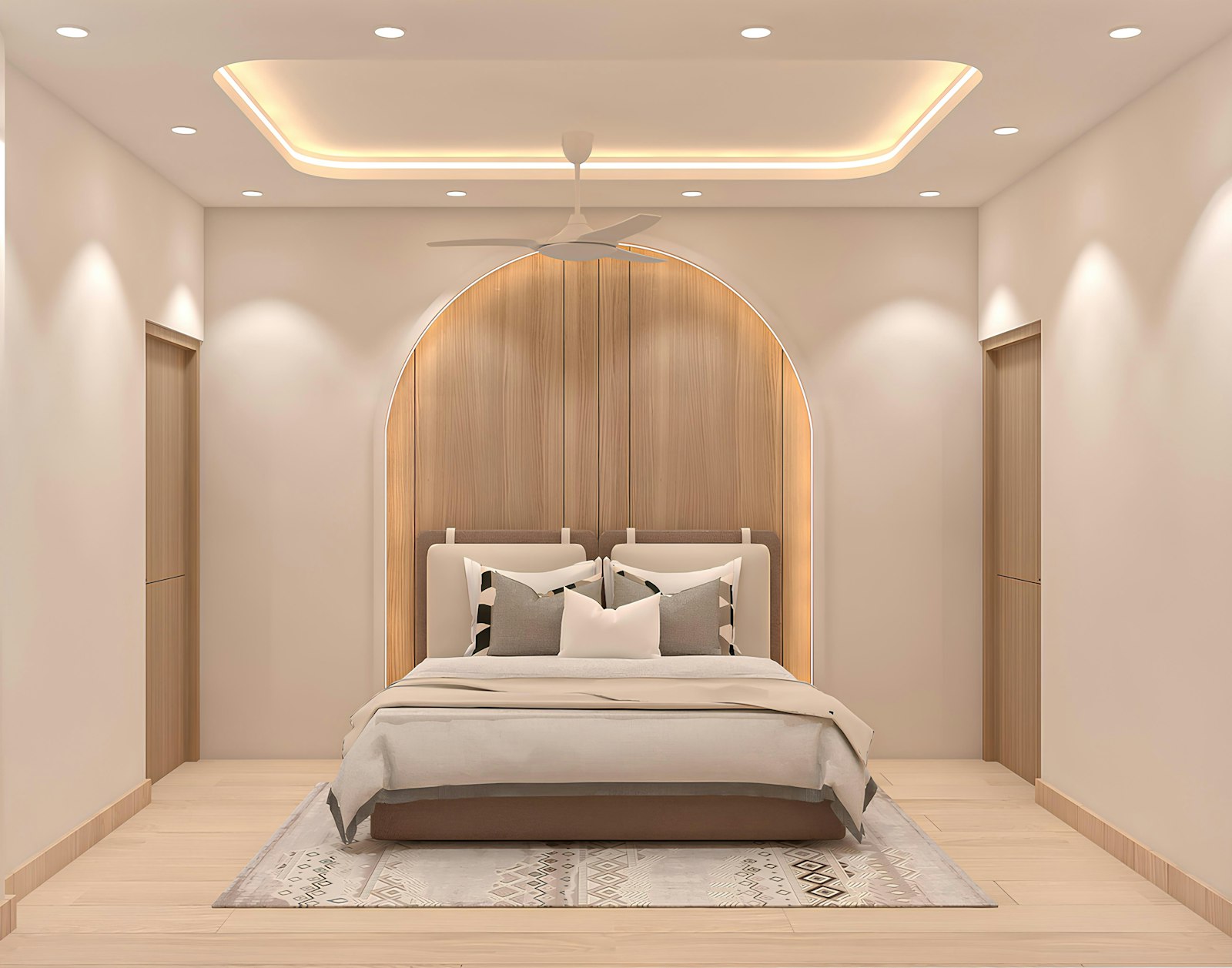
Headboard proportion: a tall headboard can carry a larger nightstand, while a low headboard looks better with something lighter. With a wide or winged headboard, measure the headboard itself, not just the mattress, since it may overhang the space where the nightstand stands. A bed like the Ala, with a wing headboard, or the tall channel-quilted Sipario sets the scale for everything beside it.
Room width: add the bed width, two nightstands and the gaps, and check that you still have roughly 24 to 36 in of walkway on each side of the bed where you need it. If not, go narrower rather than skipping a nightstand on one side.
Clearance from the bed
Leave about 2 to 6 in (5 to 15 cm) between the nightstand and the side of the bed. Less than that and the bedding catches on the corner and the nightstand is hard to clean around; more than that and things fall into the gap, and the nightstand starts to feel detached from the bed.
- Line up the front edges. Many people align the nightstand front roughly with the mattress or a little behind it, so it's within reach but not in the way when you get up.
- Watch for bed rails and side panels. An upholstered frame can be several inches wider than the mattress. Measure the clearance from the frame.
- Drawer and door swing. A door that opens toward the bed needs more room than a drawer. Check you can open it fully without standing in an awkward spot.
- Outlets and cables. Plan where the lamp and charger plug in. A small gap behind the nightstand, or a cut-out in the back, keeps plugs from pushing it forward.
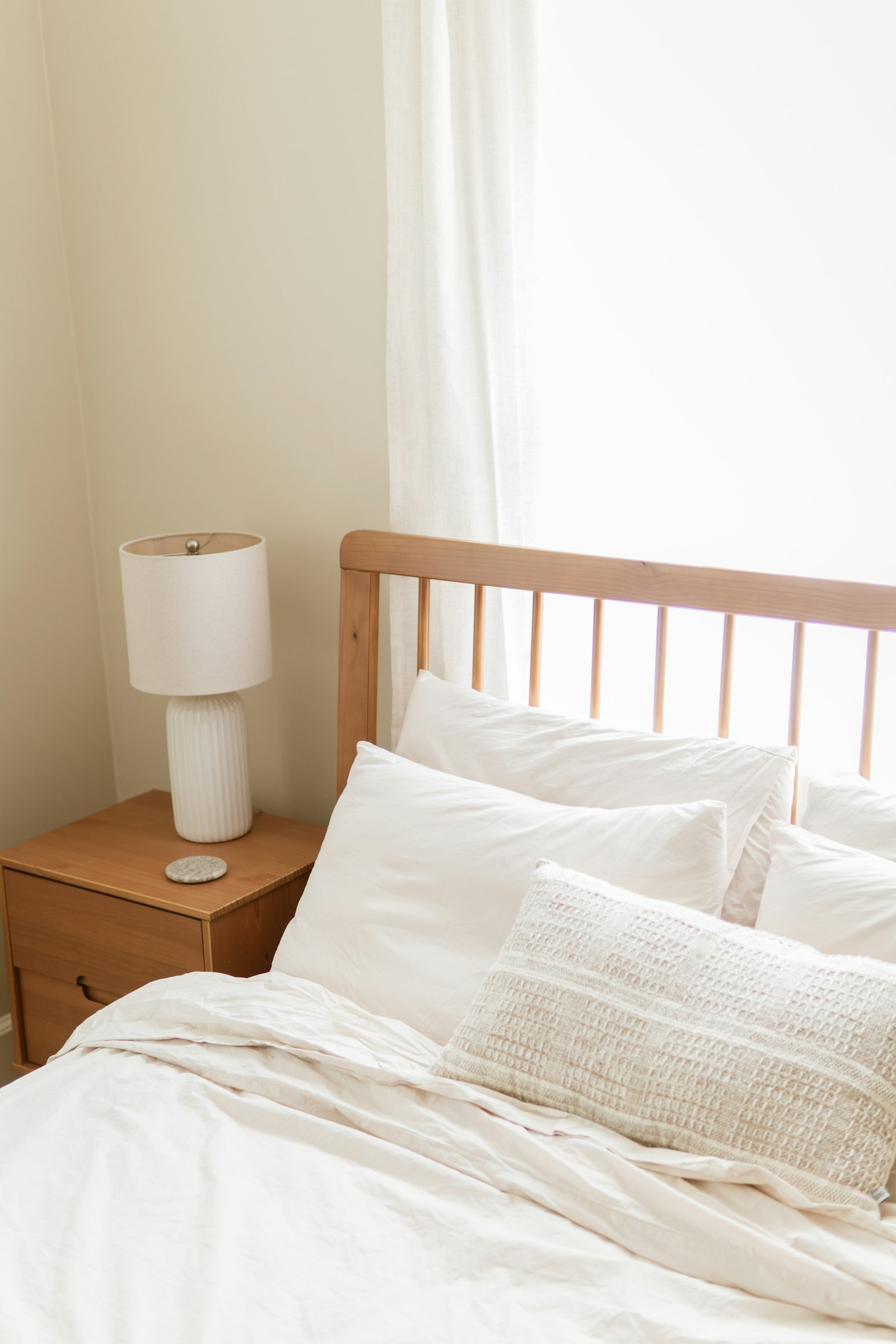
Lamp height and bedside lighting
A bedside lamp is the piece most often sized wrong, and the fix is simple: when you sit up in bed against the headboard, the bottom of the shade should be close to eye level. Higher and you see the bare bulb; lower and the light falls on the nightstand instead of your book.
To find the right lamp height:
- Sit up in bed the way you read, against your pillows.
- Have someone measure from the floor to your eye level, typically somewhere around 38 to 45 in depending on the bed and the person.
- Subtract the nightstand height. The result is roughly where the bottom of the shade should be, measured from the nightstand top.
On a nightstand of typical height, that usually means a table lamp of around 24 to 28 in overall, though shade shape and how far it sits below the top of the lamp make a difference. Shade width should normally be narrower than the nightstand so the lamp doesn't overhang the edge.
Alternatives: wall sconces free up the whole surface and work well with small or floating nightstands; mount them so the shade or light source sits near seated eye level and a little to the side of where your head rests. A floor lamp beside the bed suits wide bedrooms and low nightstands that can't carry a tall table lamp. The oak and linen Mattino floor lamp is one option; see all lighting.
Storage: drawers, shelves or open
Decide what you actually keep by the bed before choosing a style. The top only needs to hold a lamp, a phone and a glass; the rest is about what you want hidden.
- One drawer: enough for chargers, glasses, a notebook and medicine. Keeps the top clear.
- Two or three drawers: useful if the nightstand doubles as clothing or linen storage in a small bedroom.
- Open shelf: good for books and a basket. It looks lighter but shows everything.
- Door cabinet: hides bulkier items, though the door needs swing room beside the bed.
- Open legs or floating: show more floor, which makes a small room feel larger, and make it easy to clean under. They store less.
If storage is tight, consider a bed with built-in features. The Sogno bed has a channel headboard with USB rails, so devices can charge without a cable running across the nightstand.
Matching vs mismatched nightstands
A matching pair is the simplest choice and suits symmetrical rooms: same height, same width, same lamps. It makes the bed the clear centerpiece.
Mismatched nightstands work well when they share something, so the pairing looks intentional:
- Keep the heights close. Aim for tops within an inch or two of each other and of the mattress. Height is what the eye notices first, and it's also what matters for use.
- Balance visual weight. A chunky chest on one side and a slim table on the other can work if lamps or artwork even things out, for example a taller lamp over the smaller piece.
- Repeat one element. Same wood tone, same metal, same lamp, or same color links two different pieces.
- Fit each side to its user. One partner may want drawers and the other a shelf for books; mismatched nightstands let each side work for the person sleeping there.
Asymmetry is also a practical answer to awkward rooms: a window, door or radiator on one side may only leave space for a narrow table.
Quick checklist
- Measure floor to mattress top with bedding on.
- Choose a nightstand within about 2 in of that height, slightly lower if in doubt.
- Scale width to the bed: roughly 18 to 24 in for a queen, 24 to 30 in for a king.
- Keep depth around 14 to 20 in and check the walkway beside the bed.
- Leave 2 to 6 in between nightstand and bed frame.
- Pick a lamp so the shade's bottom sits near eye level when you sit up.
- Choose drawers, shelf or open based on what you keep by the bed.
If you're replacing the bed too, choose it first, since its height sets everything else. Our bed size guide covers mattress and frame sizes, and the beds and Editions bedroom collections show what's available. For a full room plan, our interior design service can help.
Questions people ask
How tall should a nightstand be compared to the bed?
The top of the nightstand should be within about 2 inches of the top of the mattress, above or below. Slightly lower usually feels better than slightly higher. Measure from the floor to the top of the mattress with bedding in place, not to the bed frame.
What is the standard nightstand height?
Most nightstands are 24 to 30 inches tall, because most combinations of bed frame and mattress put the mattress top in that range. Low platform beds often need nightstands closer to 16 to 22 inches, while tall beds with thick mattresses may need 30 inches or more.
Can a nightstand be taller than the bed?
It can, but keep it within about 2 inches of the mattress top. A nightstand much taller than the mattress puts objects at shoulder height when you're lying down, makes things easier to knock over and can feel like it crowds the bed.
How wide should a nightstand be for a queen bed?
Typically 18 to 24 inches wide for a queen bed. King beds suit wider nightstands of about 24 to 30 inches. Check the room width as well: you still want a comfortable walkway beside the bed after adding both nightstands and the gaps between them.
How far should a nightstand be from the bed?
About 2 to 6 inches from the side of the bed frame. That leaves room for bedding to hang and for cleaning without leaving a gap so wide that items fall through or the nightstand feels disconnected from the bed. Measure from the frame, not the mattress.
How tall should a bedside lamp be?
Choose a lamp that puts the bottom of the shade near eye level when you sit up in bed. On a nightstand of typical height, that often means a lamp of roughly 24 to 28 inches overall. Measure your seated eye height, subtract the nightstand height, and compare that with the lamp's shade height.
Do nightstands have to match?
No. Mismatched nightstands look intentional when their heights are close to each other and to the mattress, and when they share one element such as wood tone, metal finish, color or the same lamps. They also let each side of the bed suit the person who sleeps there.
Pieces that fit this advice

Still deciding?
Bring your floor plan. A Blankspace designer will help you measure, choose coverings and compose the room, in the Bay Area or by video.
Keep reading
- Sizing Bed sizes: mattress size chart and how to choose Standard US mattress sizes are twin 38 x 75 in, twin XL 38 x 80 in, full 54 x 75 in, queen 60 x 80 in, king 76 x 80 in and California king 72 x 84… Read the guide
- Sizing Rug size guide: what size rug for your living room, bedroom and dining room Most living rooms need an 8x10 or 9x12 rug. Choose a size large enough that at least the front legs of the sofa and chairs rest on it, and leave a… Read the guide
- How it works Custom furniture: how it works, what you can change and what it costs Custom furniture is built to order after you choose its specifications: usually the size, configuration, fabric or leather, cushion fill, legs and… Read the guide