Living room
Sectional sofa guide: types, configurations and sizing
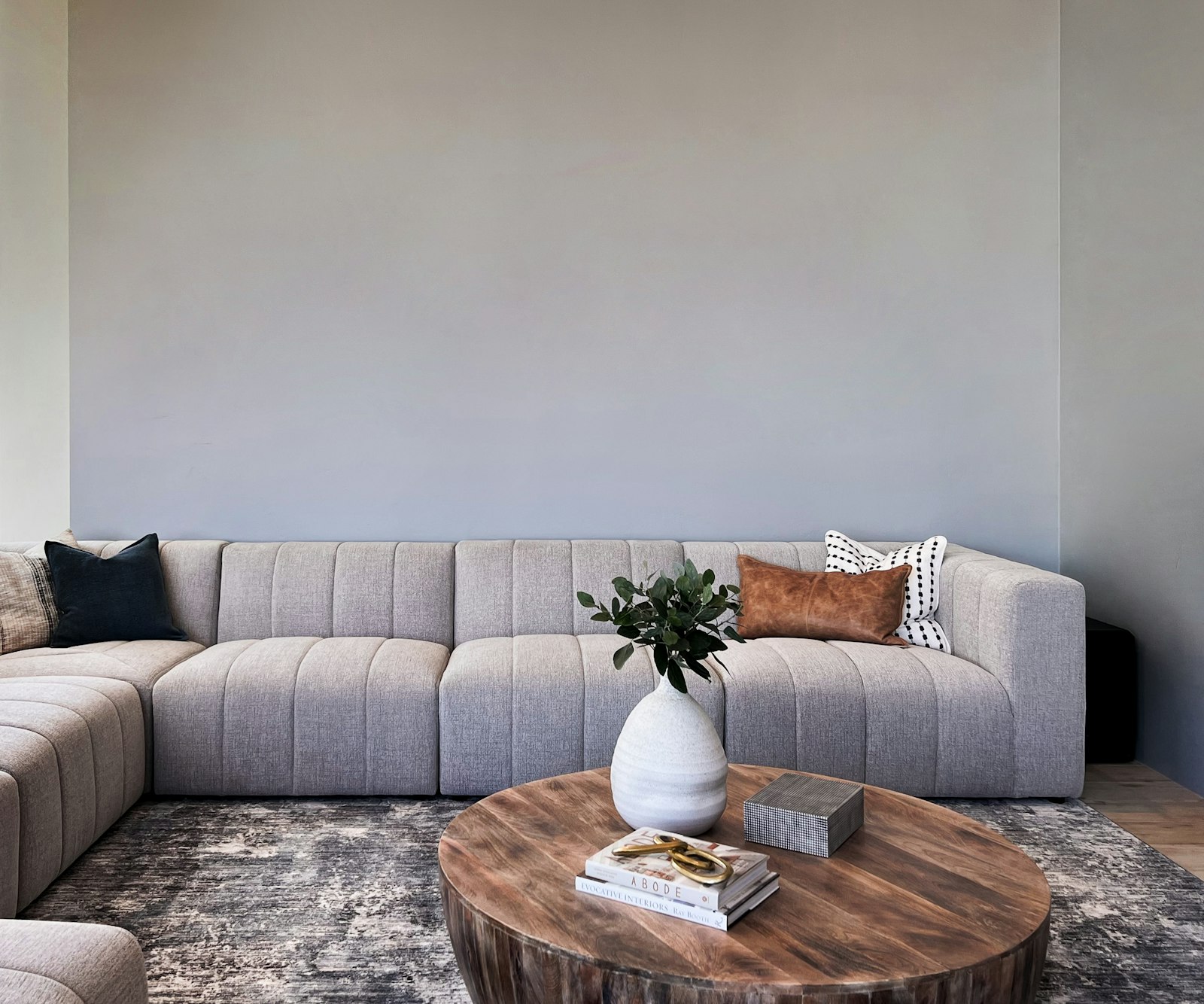


The short answer
The main types of sectional sofa are L-shaped (corner), chaise, U-shaped, bumper, curved and modular. Left-arm facing (LAF) and right-arm facing (RAF) describe which side the arm or chaise is on when you stand facing the sofa. L-shaped sectionals typically run 90 to 130 in per side; leave 30 to 36 in walkways around them.
Remember
- LAF and RAF are always judged standing in front of the sofa, looking at it, never sitting on it.
- A chaise sectional seats about the same as a sofa but adds a lounging spot; an L-shape adds seats.
- L-shaped sectionals are typically 90 to 130 in on each side; U-shapes 110 to 150 in wide.
- Corner seats are often the least comfortable spot; check legroom there before buying.
- Modular sectionals are easiest to move, deliver and reconfigure.
Contents
Types of sectional sofas
A sectional is a sofa made of two or more pieces joined together. The pieces and their arrangement decide how many it seats, how much floor it takes and how it shapes the room.
| Type | Shape | Typical size | Best for |
|---|---|---|---|
| L-shaped (corner) | Two sofas meeting at a corner seat | 90 to 130 in per side | Corners, larger families, open-plan rooms |
| Chaise sectional | Sofa plus an extended seat at one end | 90 to 120 in wide; 60 to 70 in deep at chaise | Smaller rooms, lounging, one or two people stretching out |
| U-shaped | Three sides, with corners or chaises at both ends | 110 to 150 in wide; 65 to 100 in deep | Large rooms, media rooms, big households |
| Bumper | Sofa plus an armless, rounded end piece | Varies; the bumper is often 35 to 45 in | Softer corner, flexible lounging |
| Curved | Continuous arc or sweeping curve | Varies widely by radius | Conversation areas, floating in large rooms |
| Modular | Independent units that connect in any order | Fully variable | Changing homes, tricky deliveries, custom shapes |
Left-arm facing vs right-arm facing (LAF and RAF)
This is where most sectional orders go wrong, so here is the rule in one sentence: stand in front of the sofa, facing it, as if you are looking at it in a showroom. The side the arm (or chaise) is on from that viewpoint is its facing.
- Left-arm facing (LAF): standing in front, the arm is on your left.
- Right-arm facing (RAF): standing in front, the arm is on your right.
It is not judged from sitting on the sofa. Sitting reverses left and right, which is why people order the wrong one.
Applying it to a chaise sectional
A RAF chaise sectional has the chaise on the right as you face the sofa. A LAF chaise sectional has it on the left. Some sellers name the configuration by the chaise, others by the sofa piece attached to it, so a "LAF sofa + RAF chaise" and a "RAF chaise sectional" can be the same thing. If the product page shows a diagram, trust the diagram.
How to work out which one you need
- Stand in the doorway or main viewpoint and face the wall where the sectional will go.
- Note which end should hold the chaise or the return: usually the end away from the main walkway, or the end facing the TV or window.
- If it is on your right, you want the chaise or return on the right: RAF. On your left: LAF.
- Sketch it, with arrows marking the doorways, and check it against the configuration diagram before ordering.
Reversible chaises, which can attach on either side, remove the risk entirely and are useful if you move often.
L-shaped and corner sectionals
An L-shaped sectional is two sofa pieces joined by a corner unit. It is the most efficient way to seat a lot of people, typically five or six adults, and it uses a room corner that would otherwise be dead space.
Know the two sides by name. Manufacturers usually describe them by length, so a "110 × 90 in" L-shape has a 110 in side and a 90 in side. Equal sides look balanced; unequal sides let you fit a long wall and a short return.
The weak spot is the corner seat. With legs sharing a corner, the person there often has less legroom, and a deep corner can be hard to sit back in. Sit in it before you buy. Corner designs with a softened or curved inner angle, such as the curved corner configuration of Golfo, ease this.
In open-plan spaces, an L-shape floated in the room, rather than pushed into a corner, works as a room divider. Leave at least 30 in of walkway behind it and finish the exposed back properly; check that the back is upholstered to the same standard as the front.
Chaise, bumper and U-shaped sectionals
Chaise sectional
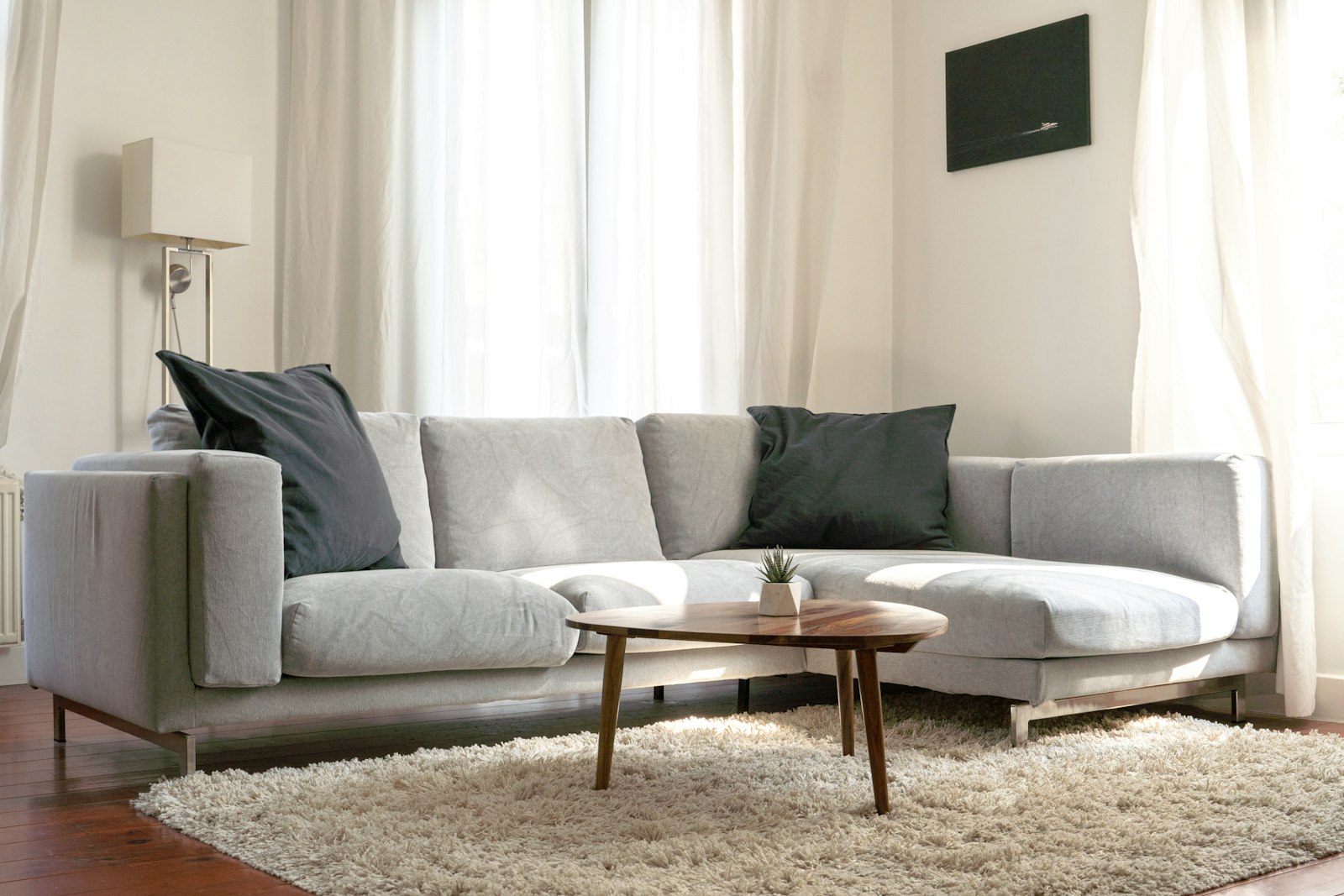
A chaise sectional is a sofa with one extended seat, long enough to put your legs up. It seats about the same number of people as a regular sofa, but adds a lounging spot, and it takes up less floor than a full L-shape. That makes it the most popular sectional for average rooms and apartments. Chaises are typically 60 to 70 in (152 to 178 cm) long. The Cortile is a family chaise sectional with washable covers, also available with a bumper.
Bumper sectional
A bumper is an armless end piece with a rounded or squared-off edge, attached to a sofa so the seat continues past where an arm would be. It works as a deep corner or a short chaise, depending on its size, and gives a softer, more open look than a hard corner. Bumpers often have no back on the outer side, which keeps sightlines open.
U-shaped sectional
A U-shape wraps three sides, using two corners or two chaises. It is ideal for media rooms and families who all want to sit together, but it needs a large room: typically at least 12 × 14 ft and often more. Plan the opening of the U toward the TV or the room's focal point, and make sure the coffee table inside it remains reachable from every seat.
Curved and modular sectionals
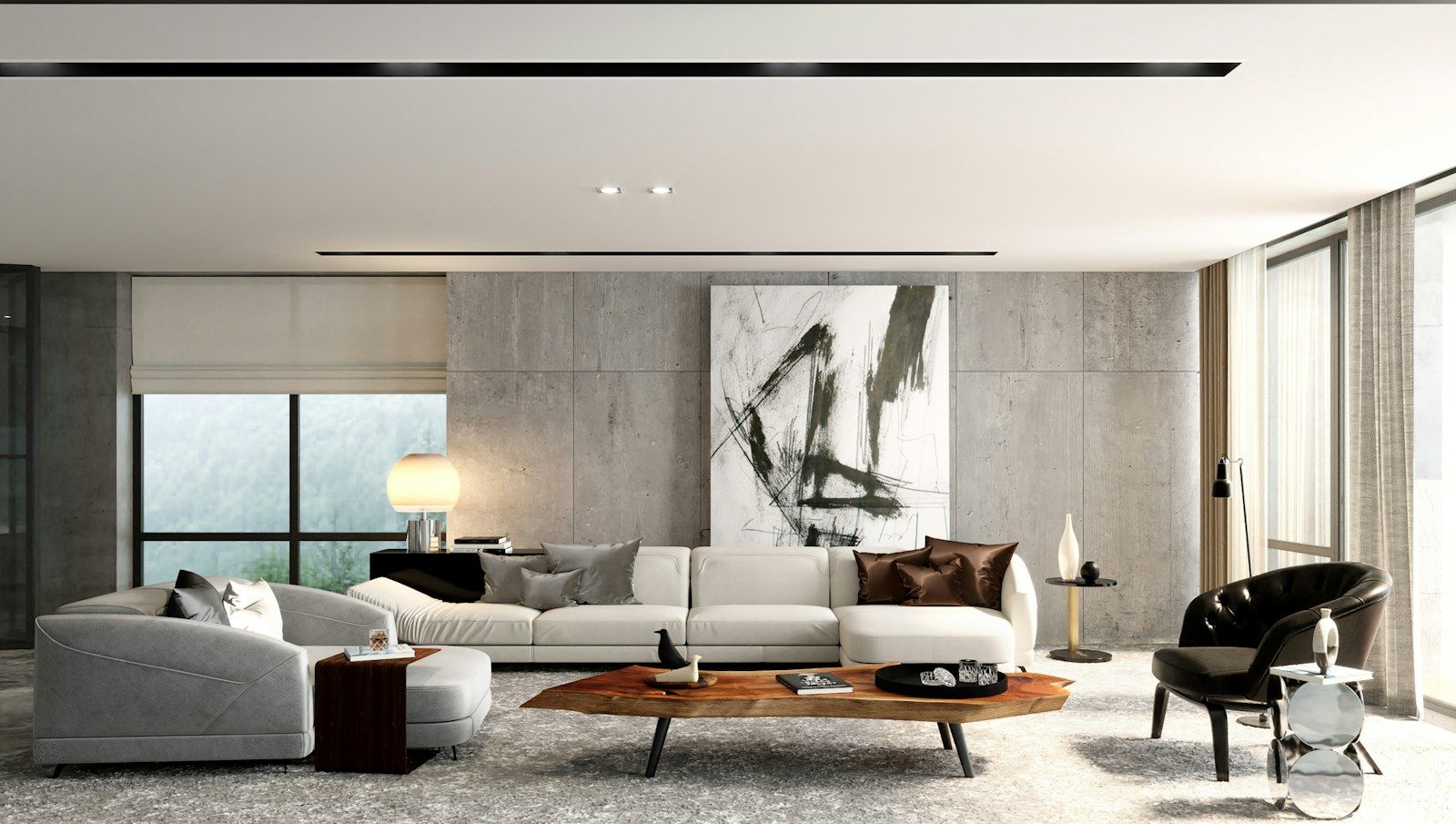
Curved sectionals follow an arc rather than a right angle. They face people toward each other, which makes conversation easier, and they soften a room full of straight lines. They look best floated away from walls, so they suit larger or open-plan rooms rather than tight corners. Golfo is built as a continuous curved modular sofa.
Modular sectionals are made of individual units, such as armless seats, corners, chaises, ottomans and arm pieces, that connect in almost any order. Their advantages are practical:
- Delivery: each unit is far smaller than a whole sofa, so they fit through narrow doors, stairs and elevators.
- Flexibility: you can swap a chaise from left to right, add a seat, or split the set across two rooms when you move.
- Repair: a damaged unit can sometimes be replaced on its own.
Systems vary from simple connecting clips to rigid shared frames. Highly modular designs like Telaio or Marea, which adds power recline to individual seats, let you build a configuration seat by seat.
How to size a sectional
- Measure both walls from the corner, and note windows, radiators, vents and doors along each.
- Subtract clearance. Keep 30 to 36 in (76 to 91 cm) for main walkways and leave room for side tables if you want them.
- Check the depth. Most sectionals are typically 35 to 42 in (89 to 107 cm) deep, plus 60 to 70 in at a chaise. Make sure the chaise does not block a walkway or door swing.
- Count seats realistically. Allow roughly 24 to 30 in per person, and count the corner as half a seat if it is cramped.
- Tape out the full footprint and leave it for a day or two.
- Measure the delivery route for the largest single piece, not the whole sectional. See sofa dimensions for doorway and diagonal measurements.
A coffee table for a sectional usually sits 14 to 18 in from the seats; for an L-shape, a square or round table often works better than a long rectangle. See the coffee table size guide and rug size guide.
A rough match of room to sectional:
- Under about 12 × 12 ft: a compact chaise sectional or a modular set with few pieces.
- About 12 × 14 to 14 × 16 ft: an L-shape or chaise sectional of 90 to 110 in.
- Larger and open-plan: a large L-shape, U-shape or curved sectional floated in the room.
To design a configuration to your measurements, use Create your sofa, or ask our interior design service.
Questions people ask
What does LAF and RAF mean on a sectional?
LAF means left-arm facing and RAF means right-arm facing. Both are judged standing in front of the sofa, looking at it, not sitting on it. A RAF chaise sectional has the chaise on your right as you face it. A LAF chaise sectional has the chaise on your left.
What is the difference between a chaise and an L-shaped sectional?
A chaise sectional has one extended seat for putting your legs up, and seats about as many people as a regular sofa. An L-shaped sectional has two full sofa sections meeting at a corner, so it seats more people but takes more floor space. Chaise sectionals suit smaller rooms; L-shapes suit larger households.
How do I know if I need a left or right facing sectional?
Stand at the main entrance or viewpoint of the room and face the wall where the sectional will go. If the chaise or return should be on your right, you need right-arm facing; if on your left, left-arm facing. Sketch the room and compare it with the product's configuration diagram before ordering.
What size sectional fits my living room?
Measure both walls from the corner and subtract 30 to 36 inches for walkways. Most L-shaped sectionals are 90 to 130 inches per side and 35 to 42 inches deep, with chaises reaching 60 to 70 inches. Tape out the full footprint on the floor before choosing, and measure the delivery route too.
What is a bumper sectional?
A bumper sectional is a sofa joined to an armless end piece, called a bumper, that has a rounded or squared edge. It continues the seat past where an arm would normally be, creating a soft corner or short chaise. Bumpers often have no outer back, which keeps the look open and airy.
Are modular sectionals worth it?
Modular sectionals are worth considering if you move often, live in a building with narrow doors or stairs, or want to change the layout later. Each unit is delivered separately, and pieces can be rearranged, added or swapped. The trade-off is that some connection systems are less rigid than a single fixed frame.
Can a sectional work in a small living room?
Yes, if you choose carefully. A compact chaise sectional or a small modular set with slim arms and raised legs can fit rooms under about 12 by 12 feet. Keep the main walkway at least 30 inches wide, and avoid deep seats and bulky arms that eat floor space.
Pieces that fit this advice

Still deciding?
Bring your floor plan. A Blankspace designer will help you measure, choose coverings and compose the room, in the Bay Area or by video.
Work it out for your room
Keep reading
- Sizing Sofa dimensions: standard sizes and how to measure A standard three-seat sofa is typically 72 to 90 in (183 to 229 cm) wide, 32 to 40 in (81 to 102 cm) deep and 30 to 36 in (76 to 91 cm) high… Read the guide
- Buying guide How to choose a sofa: frame, springs, cushions and fit To choose a sofa, start with size: measure the room and every doorway on the delivery route. Then check the construction: a kiln-dried hardwood or… Read the guide
- Layout How to arrange living room furniture: layouts, distances and rules of thumb Start with a focal point (a fireplace, window or TV) and face the main sofa toward it. Group seating so people sit roughly 4 to 10 ft apart, keep… Read the guide
- Recliners Power recliner vs manual recliner: how to choose a recliner sofa A manual recliner uses a lever, pull tab or body pressure to recline; it is simpler, needs no outlet and usually costs less. A power recliner uses a… Read the guide